Satellite Motion
Orbital Velocity, Gravity as Centripetal Force, and Geosynchronous Orbits
Satellite - a smaller body revolving around a larger body, held in orbit by gravity acting as the centripetal force
Provide three examples of what satellites are used for.
Communication: Satellites enable global communication by transmitting signals for television, radio, internet, and phone services across vast distances.
Weather Forecasting: Satellites monitor weather patterns, track storms, and gather data to predict weather conditions and natural disasters.
GPS and Navigation: Satellites provide precise location and timing information, essential for navigation systems in cars, airplanes, and smartphones.
I. Satellite Motion
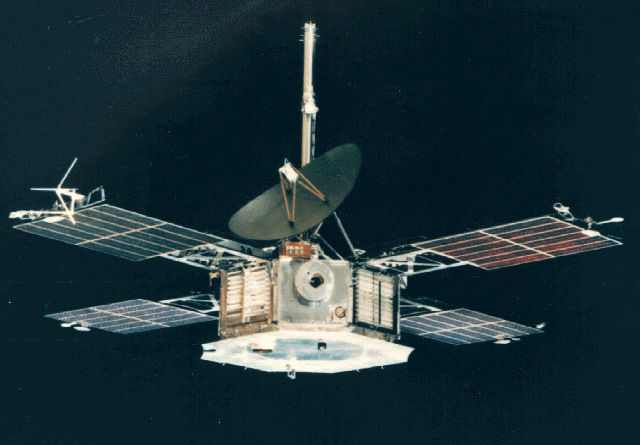
Satellite - smaller body revolving around a larger body
Why Doesn't the Moon
Fall Down?
Resource produced by WGBH
and funded by the National Science Foundation.
Teacher Domain Discussion Questions
Why doesn't the Moon hit Earth even though it is "falling" toward it?
What would happen if the Moon moved faster than it does now?
How is the Sun able to have so many planetary bodies in orbit around it?
Why do planets closer to the Sun than Earth not fall into the Sun from the pull of gravity?
If someone asked you if it's true that the Moon is always falling towards the Earth, what would you tell them?
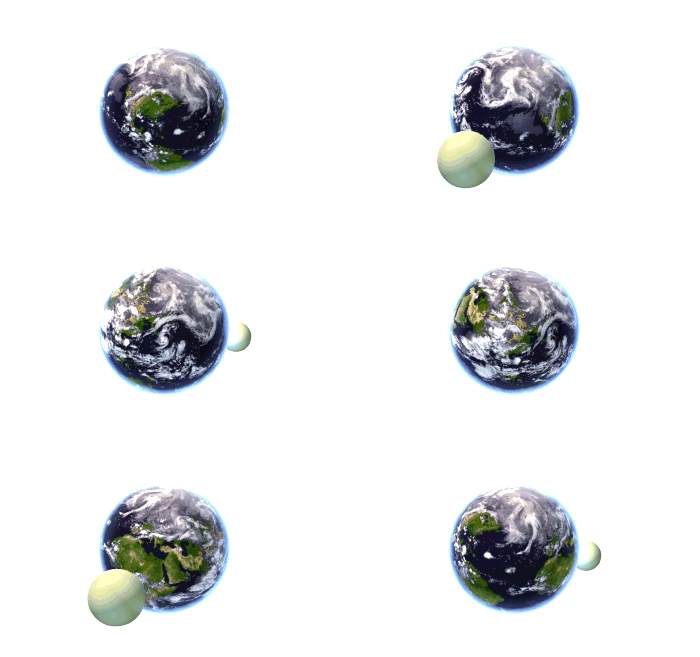
Natural Satellites
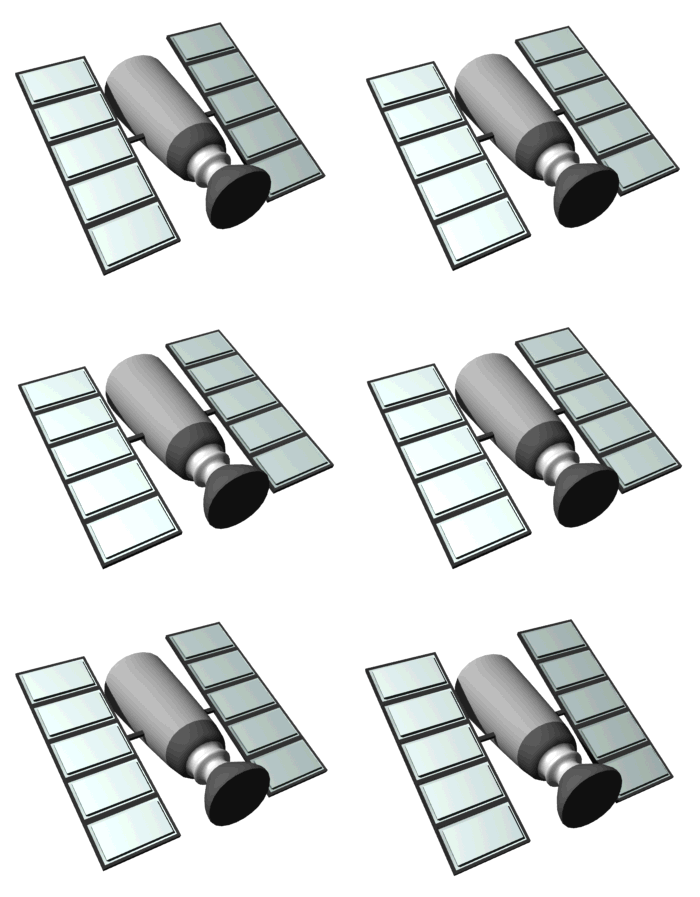
Artificial Satellites
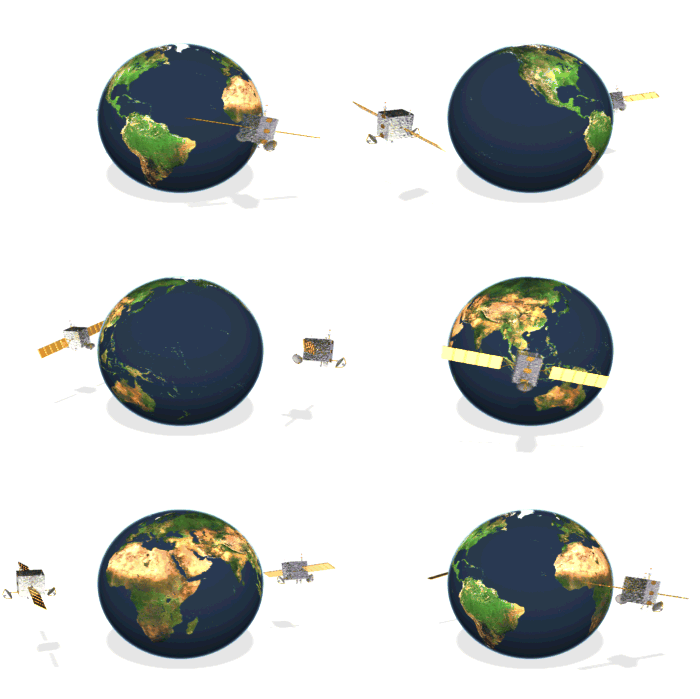
See where the earth's satellites are right now! Satellite Tracker3D
Click this link and wait until the program jumps to the screen.
A. Satellite Motion
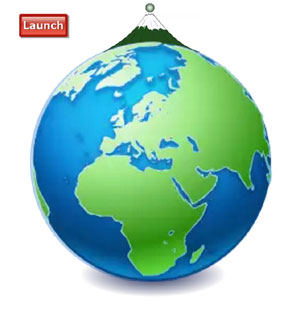
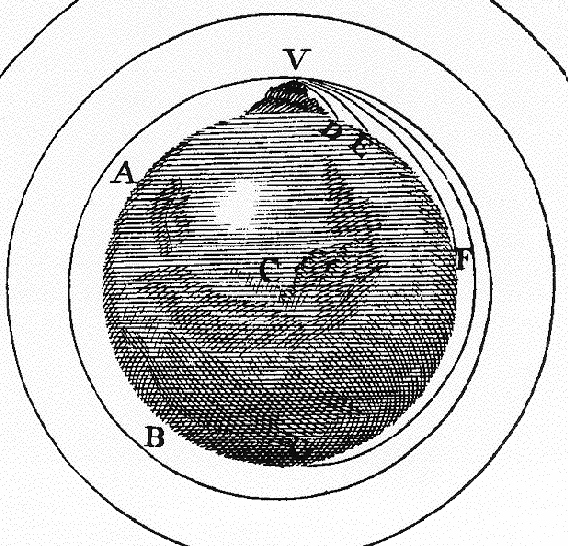
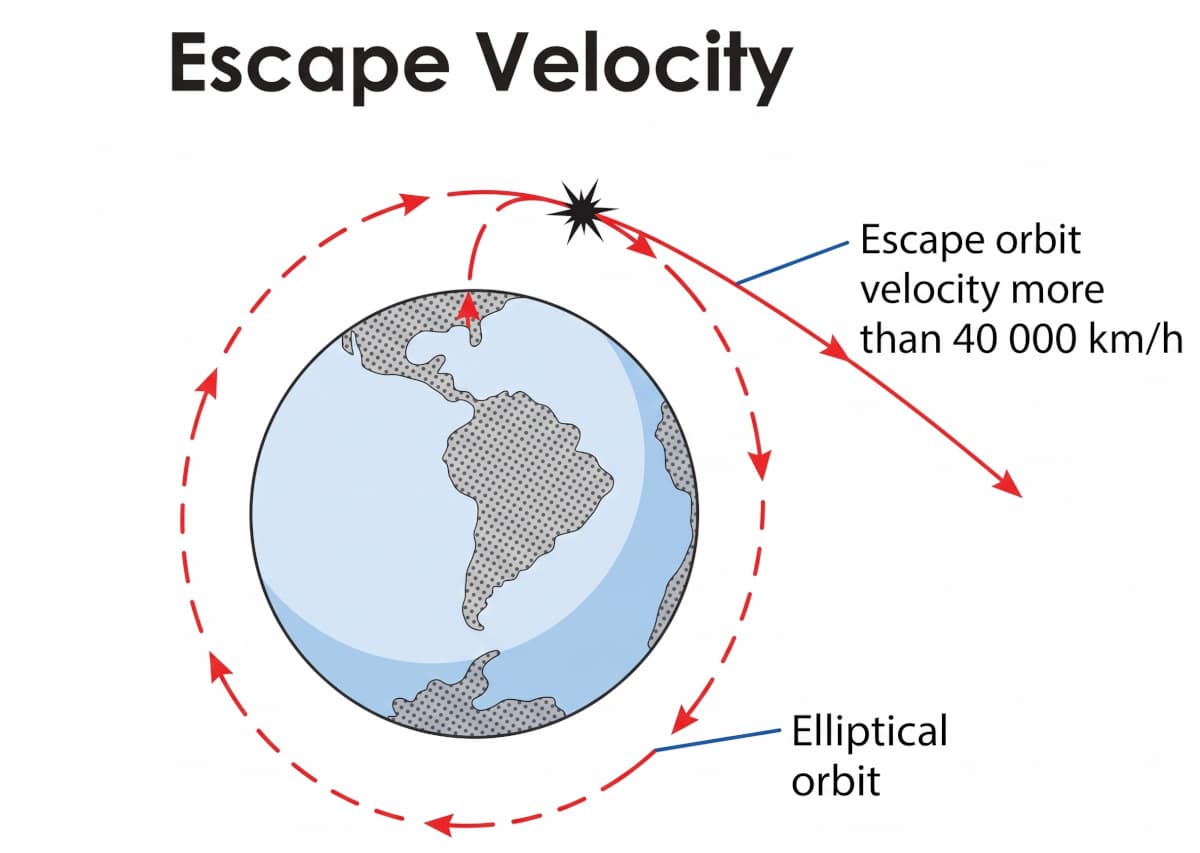
1. To send an artificial satellite into circular orbit around earth it must first achieve a speed of 7900 m/s.
If greater than 7900 m/s, the satellite has an elliptical orbit.
If velocity is greater than 11 km/s then the satellite leaves earth's orbit (called escape velocity).
2. Air resistance slows down satellites and eventually causes them to spiral back to earth.
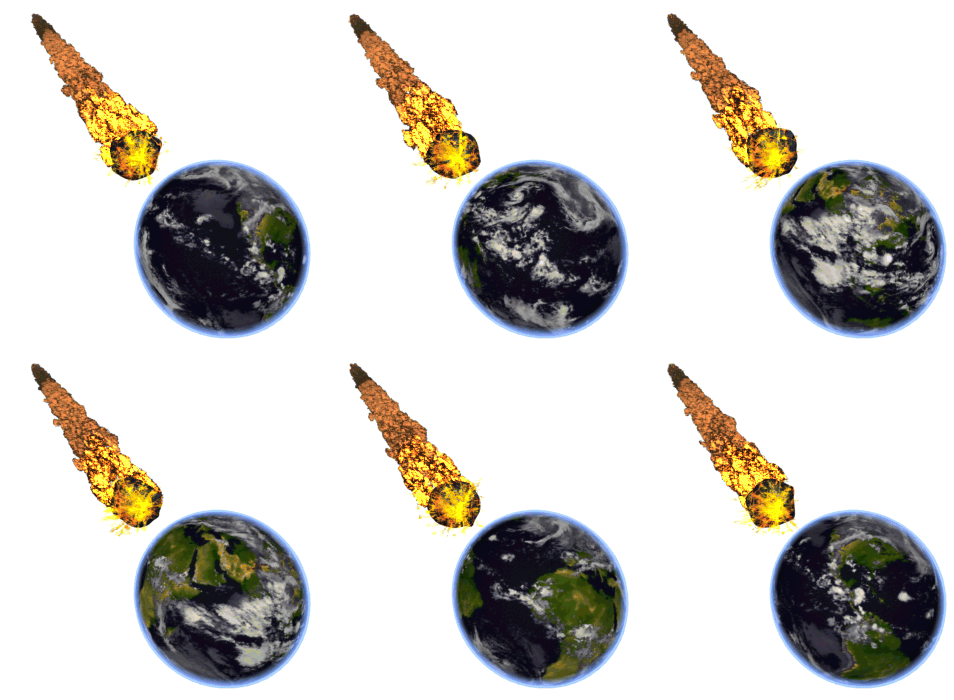
Meteorite Peekskill, Ct. (NASA)
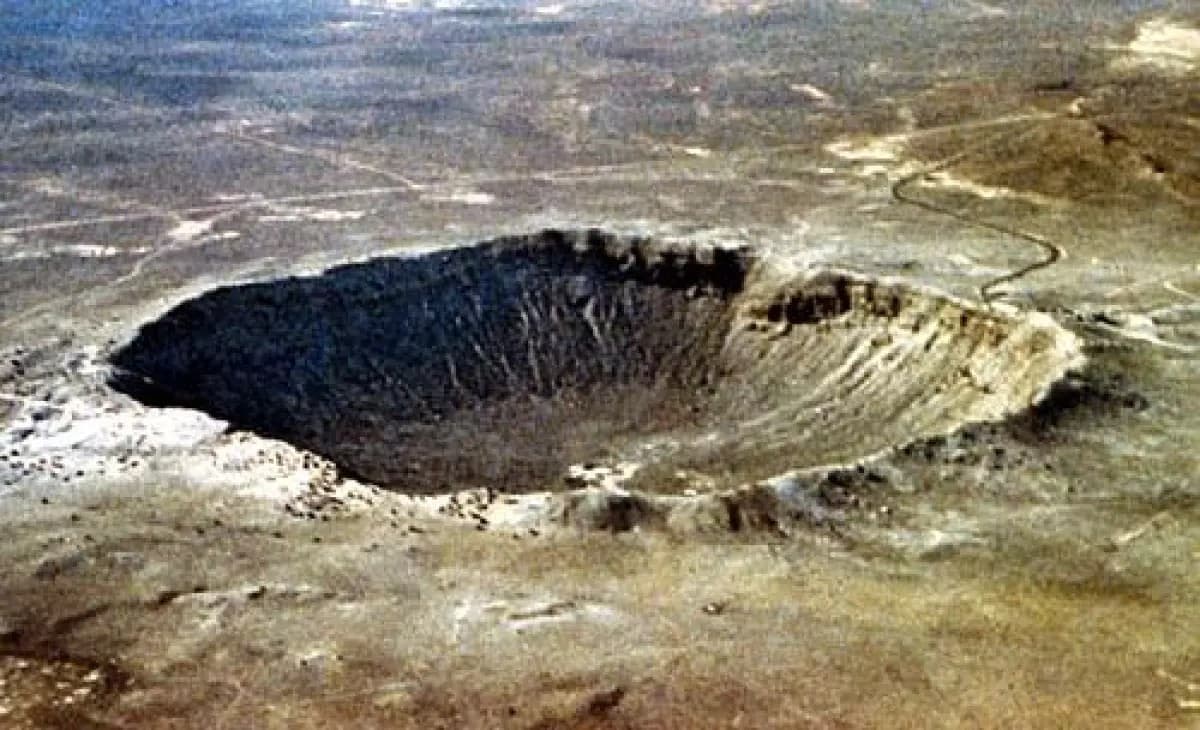
Winslow, Arizona
Crater created when a 50-meter-wide (160-foot-wide) iron-rich meteoroid struck the Earth's surface about 50,000 years ago.
B. Geosynchronous Orbits
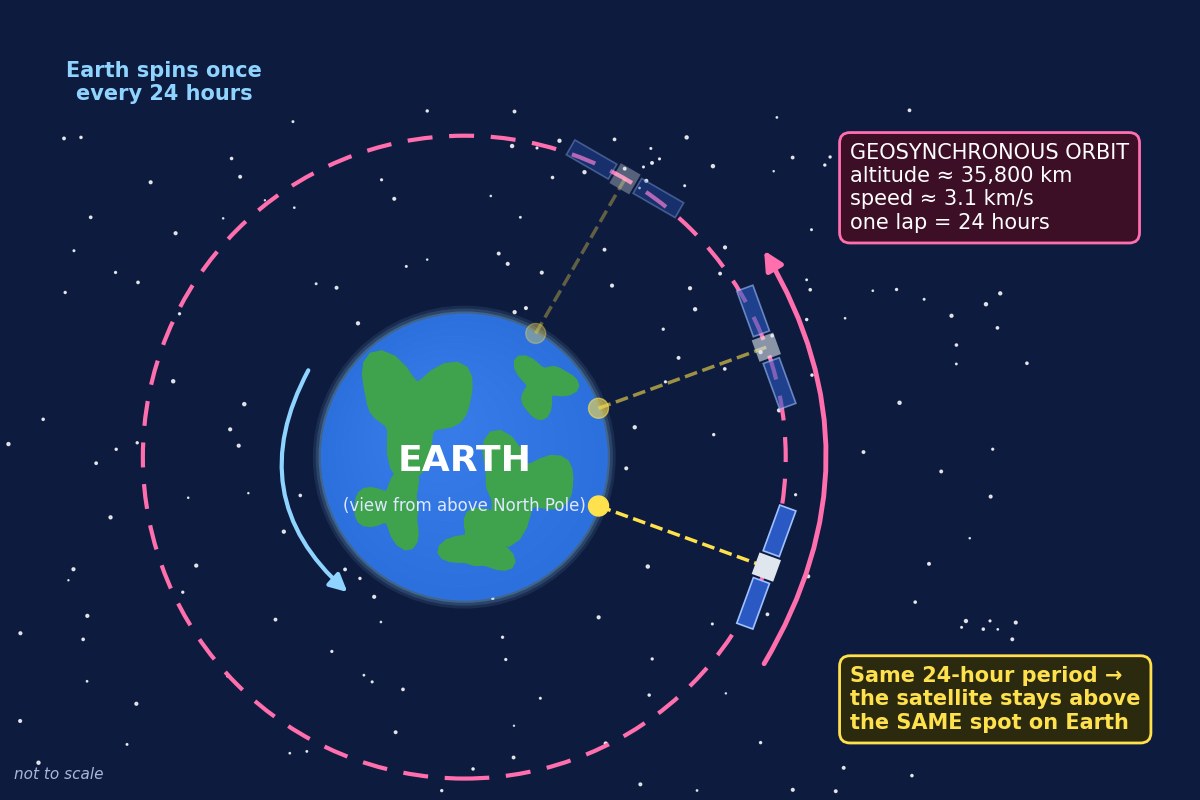
1. When a satellite orbits in time with earth's rotation it is called geosynchronous.
2. Time for one revolution - 24 hrs
3. A satellite at distance of 6 earth radii from earth's center will orbit earth every 24 hrs.
4. Since both satellite and earth move together, it always remains directly above the same spot above earth's equator.
Meteorite Impact in Virginia
PHET Animation
Why does the moon have so many craters
compared to the earth? (Hint:
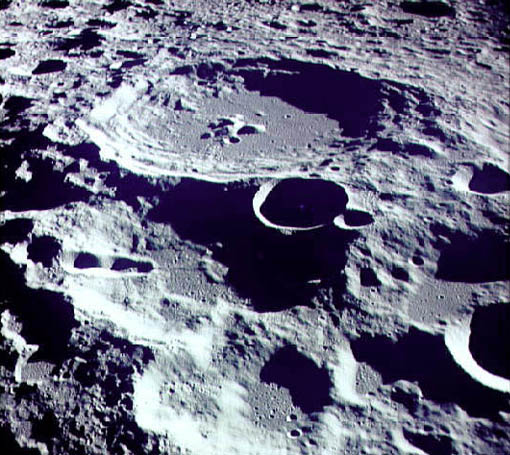
The moon has very little erosion.
"On Earth, impact craters are harder to recognize because of weathering and erosion of its surface. The Moon lacks water, an atmosphere, and tectonic activity, three forces that erode Earth's surface and erase all but the most recent impacts. Approximately 80% of Earth's surface is less than 200 million years old, while over 99% of the Moon's surface is more than 3 billion years old. Essentially, the Moon's surface has not been modified since early in its history, so most of its craters are still visible."
Learn more about Circular Motion at Georgia Public Broadcasting

NYSSLS Reading Passage · 2D Motion
Physics of Geosynchronous Satellites
Open Reading Passage → Regents Practice Version →Check Your Understanding
5 quick questions — pick an answer to see if you’re right.
1. What is a satellite?
2. What force acts as the centripetal force that keeps a satellite in orbit around Earth?
3. A satellite near Earth is launched at more than 11 km/s. What happens?
4. How long does a geosynchronous satellite take to complete one orbit?
5. Why do satellites in low orbits eventually spiral back to Earth?
GPS Satellites
The Global Positioning System uses about 30 satellites in nearly circular orbits about 20,000 km above Earth’s surface. Each satellite completes an orbit in about 12 hours. Engines are used only for small corrections.
What provides the centripetal force that keeps a GPS satellite in orbit?
▶ Want a challenge? Open 6 more Regents-style questions (harder · mixed formats)
Challenge score: 0 / 6
C1. Earth’s radius is about 6,400 km, so a GPS orbit has a radius of about 26,400 km. Substitute numerical values into a mathematical representation that can be used to determine the orbital speed of a GPS satellite, in km/s (12 h = 43,200 s). Then calculate the speed.
C2. The Moon orbits at about 3.84 × 10⁸ m from Earth’s center at about 1.0 × 10³ m/s. What is its centripetal acceleration?
C3. Place a check mark in two boxes to indicate the quantities on which the orbital speed of a satellite in a circular orbit depends.
C4. A student makes the following claim.
Place a check mark in either the Support or Refute box. Justify your response using a mathematical relationship.
C5. How does a satellite in a higher orbit compare with one in a lower orbit?
C6. GPS satellites use their engines only for small corrections. Using Newton’s laws, explain why a satellite does not need its engines running to keep moving around Earth.