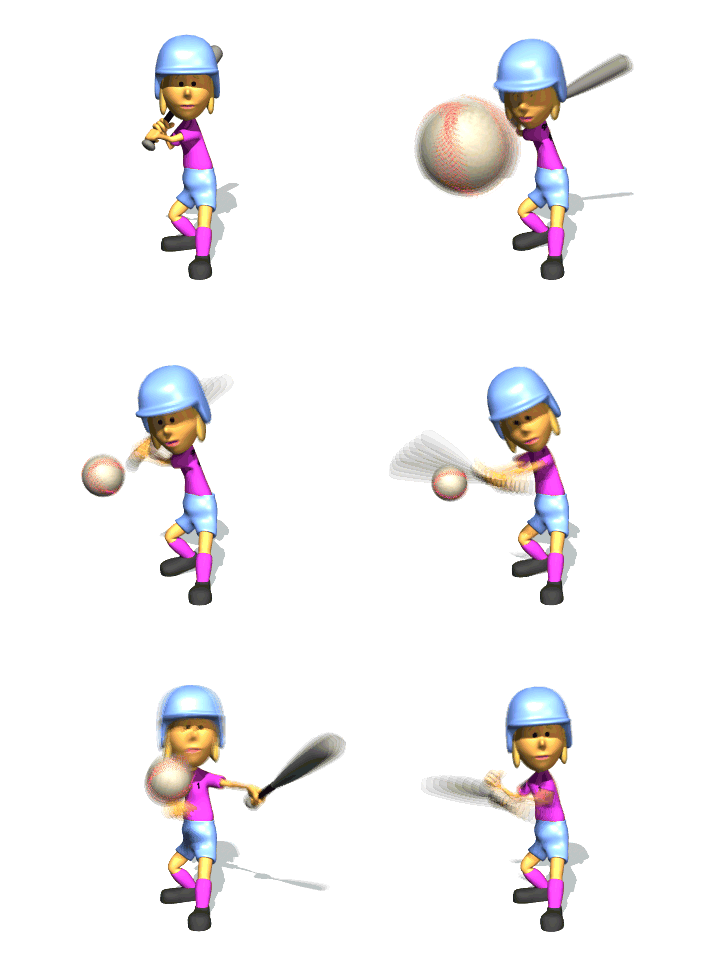
Momentum Problems
Word Problems
J = Ft = mΔv = Δp
Warm-Up


In order for a tennis serve to have the maximum speed, the server needs a big force and a long _______________
Show Me The Physics
YouTube Channel
Momentum Word Problems
A 5.0 kg mass has its velocity change from 8.0 m/s east to 2.0 m/s east. Find the object's change in momentum.
m = 5.0 kg
Vi = 8.0 m/s East
Vf = 2.0 m/s East
Δp = ?
Δp = mΔV
= (5.0 kg)(2.0 m/s − 8.0 m/s)
= −30. kg·m/s East
= +30. kg·m/s West

A 5.0 kg mass moving with a velocity of 8.0 m/s east has an impulse applied to it which causes its velocity to change to 20. m/s East. Find Impulse:
m = 5.0 kg
Vi = 8.0 m/s East
Vf = 20. m/s East
J = ?
J = mΔv = (5.0 kg)(12. m/s East)
= 60. kg·m/s east
= 60. Ns East
Find the force if the impulse was applied for 3.0 sec.
F = ?
t = 3 seconds
m = 5.0 kg
Vi = 8.0 m/s East
Vf = 20. m/s East
J = 60. kg·m/s east
J = Ft = 60. Ns East
F(3.0 sec) = 60. Ns East
F = 20. N East
Golf Ball hitting steel super slo mo
School Blocks YouTube? Click below.
GolfBallhittingsuperslomo
How long would it take for a net upward force of 100. N, to increase the speed of a 50. kg object from 100. m/s to 150. m/s.
F = 100. N
m = 50. kg
Vi = 100. m/s
Vf = 150. m/s
t = ?
FΔt = mΔv
(100. N)t = 50. kg(50. m/s)
t = 25. secs

A 1.0 kg ball traveling @ 4.0 m/s strikes a wall and bounces straight back @ 2.0 m/s. Find Δp

m = 1.0 kg
Vi = 4.0 m/s
Vf = −2.0 m/s (opposite direction)
Δp = ?
(a) Δp = mΔv
= (1.0 kg)(−2.0 m/s − 4.0 m/s)
= −6.0 kg·m/s
(b) What is impulse applied to the ball?
J = Δp = −6.0 kg·m/s
(c) What is impulse applied to the wall?
J = +6.0 kg·m/s
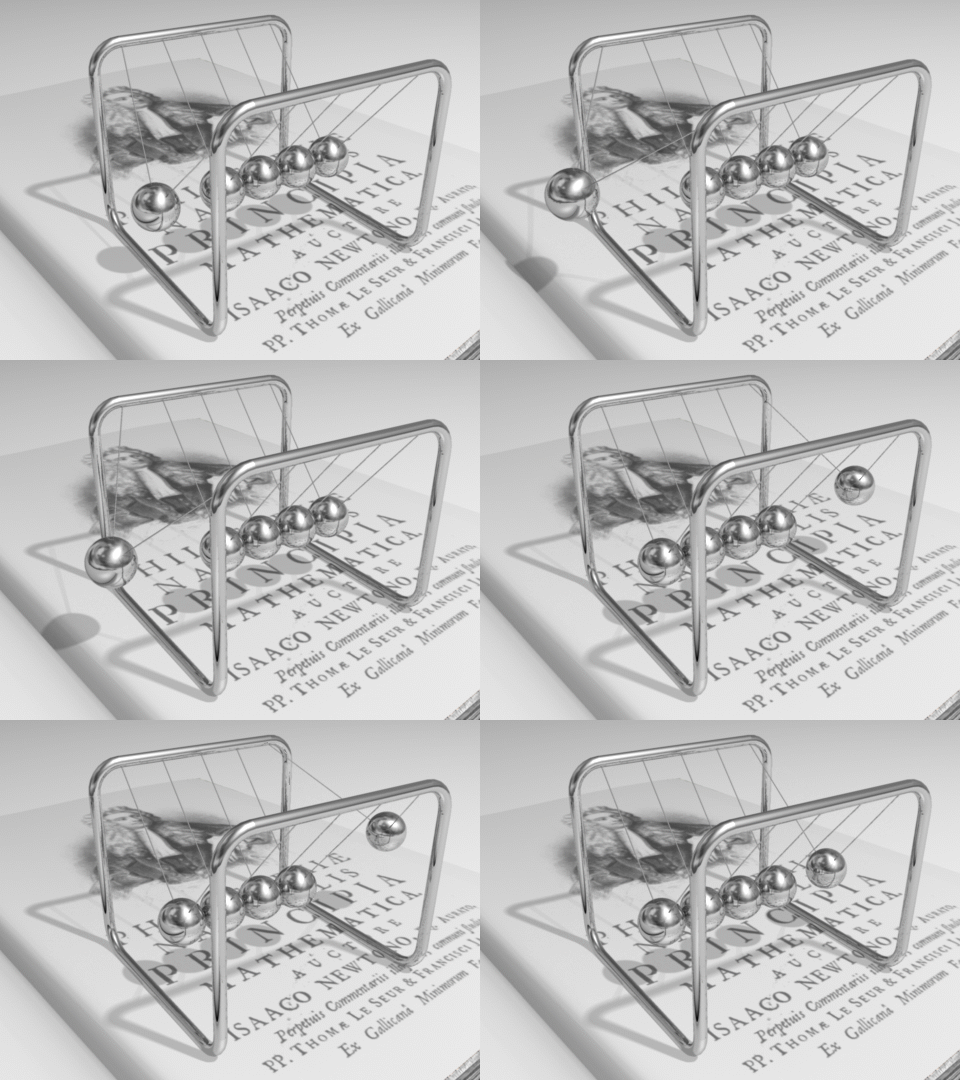
DemonDeLuxe (Dominique Toussaint)
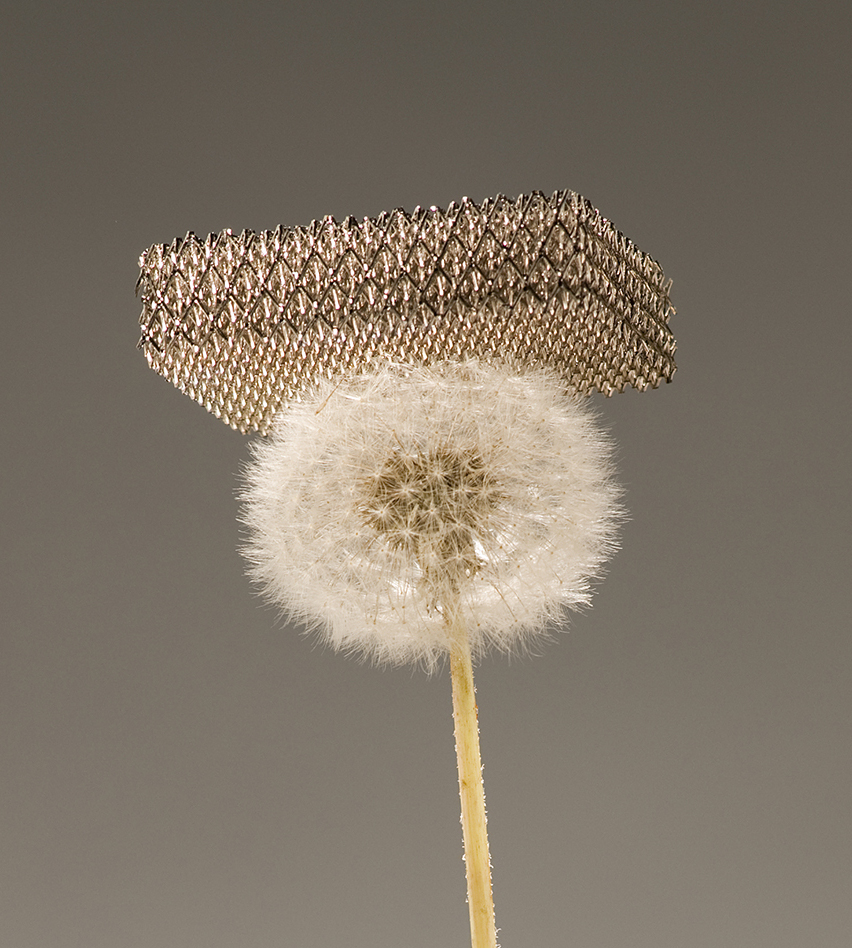
World's Lightest Material
200 times lighter than styrofoam
HRL Laboratories - See the video
Using an innovative fabrication process developed at HRL, researchers created a "micro-lattice" structure of interconnected hollow tubes with a wall thickness of 100 nanometers, 1,000 times thinner than a human hair.
Download high resolution image. High resolution video is available upon request by emailing media@hrl.com.
Photo credit: Photo by Dan Little — HRL Laboratories,
AP Physics
p. 188, #17
Δp = mΔv
Momentum only changes in the x direction
toward wall +
Vi = Vsinθ
Vf = −Vsinθ
Δp = mΔv
Δp = m(−2Vsinθ)
= 2.1 kg·m/s left
Check Your Understanding
5 quick questions — pick an answer to see if you’re right.
1. A 5.0 kg mass slows from 8.0 m/s east to 2.0 m/s east. What is its change in momentum?
2. A 5.0 kg mass speeds up from 8.0 m/s east to 20. m/s east. What impulse was applied?
3. That 60. N·s impulse was applied over 3.0 s. What was the average force?
4. A 1.0 kg ball hits a wall at 4.0 m/s and bounces straight back at 2.0 m/s. What is the magnitude of its change in momentum?
5. A ball bounces off a wall and receives an impulse of −6.0 kg·m/s. What impulse does the wall receive?
Analyzing a Football Tackle
A sports scientist analyzes a head-on tackle. A 100.-kg running back moving at 5.0 m/s north is tackled by an 80.-kg linebacker moving at 6.0 m/s south. The players hold on to each other after the collision.
What is the velocity of the two players immediately after the tackle?
▶ Want a challenge? Open 6 more Regents-style questions (harder · mixed formats)
Challenge score: 0 / 6
C1. Which object has the same momentum as a 1000.-kg car moving at 20. m/s?
C2. Substitute numerical values into a mathematical representation that can be used to determine the total kinetic energy of the two-player system before the tackle (write the running back’s term first). Then calculate the total kinetic energy.
C3. A student makes the following claim.
Place a check mark in either the Support or Refute box. Justify your response using a mathematical relationship.
C4. North is up. Choose the direction of the impulse on the linebacker during the tackle, and determine its magnitude.
●
C5. If an object’s speed doubles, how do its momentum and kinetic energy change?
C6. The linebacker wants the two players to move south after the tackle. Describe what the linebacker would need to change about his motion, and support your answer with a momentum calculation.