Matter Waves
de Broglie's hypothesis and the wave behavior of particles
| |

Check Your Understanding
5 quick questions — pick an answer to see if you’re right.
1. According to de Broglie, which objects have wave properties?
2. The de Broglie wavelength of a particle is given by…
3. An electron's speed is doubled. What happens to its de Broglie wavelength?
4. Why don't we notice the wave behavior of a thrown baseball?
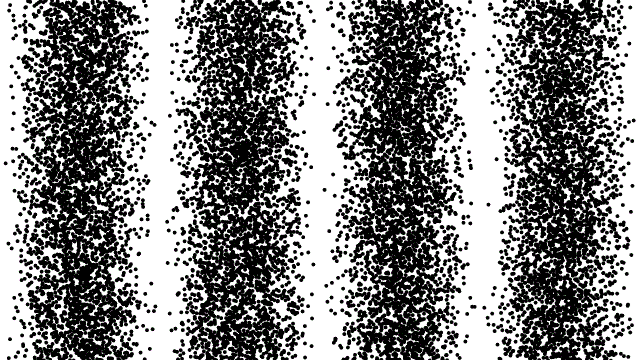
5. What 1927 observation confirmed that electrons behave like waves?
The Electron Microscope
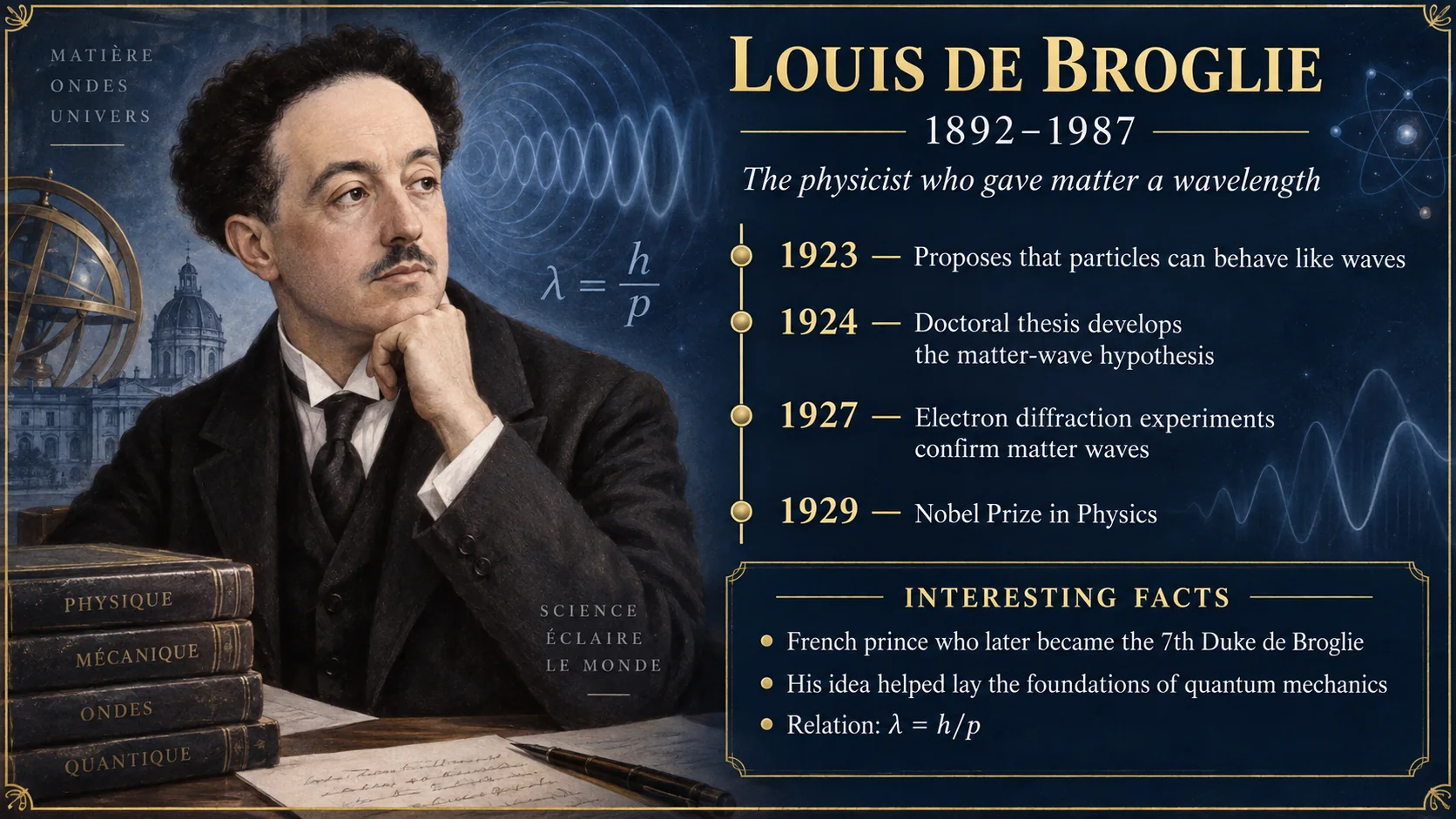
In 1924, Louis de Broglie proposed that moving particles have a wavelength, λ = h ÷ mv. Electron microscopes use fast electrons instead of light. An electron (m = 9.11 × 10⁻³¹ kg) moves at 1.0 × 10⁶ m/s. (h = 6.63 × 10⁻³⁴ J·s)
What is the electron’s de Broglie wavelength?
▶ Want a challenge? Open 6 more Regents-style questions (harder · mixed formats)
Challenge score: 0 / 6
C1. Why can electron microscopes see much finer detail than light microscopes?
C2. A proton (m = 1.67 × 10⁻²⁷ kg) moves at the same speed as the electron, 1.0 × 10⁶ m/s. Substitute numerical values into a mathematical representation that can be used to determine the proton’s de Broglie wavelength. Then calculate it.
C3. A student makes the following claim.
Place a check mark in either the Support or Refute box. Justify your response using a mathematical relationship.
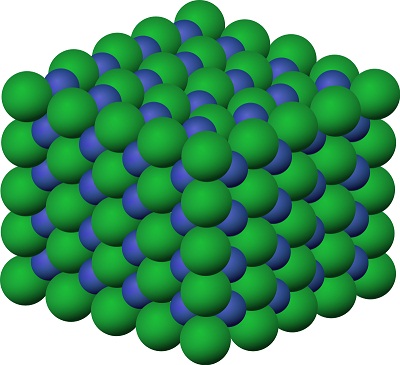
C4. To image a crystal, an engineer wants electrons with a de Broglie wavelength of 1.0 × 10⁻¹⁰ m. Determine the speed the electrons must have. Enter the number that goes in front of × 106 m/s.
C5. Which experiment provided evidence for matter waves?
C6. An engineer plans to increase the electron speed in a microscope to produce sharper images. Identify one benefit and one drawback of this design change.