Diverging Lenses
Glasses for nearsightedness and door peepholes

Do Now: Look through the peephole in a door and the whole hallway appears, small and upright. What kind of lens is in the peephole?
A diverging lens. Like a convex mirror, it spreads light out and gives a wide, smaller, upright view.
A. The Three Principal Rays
Ray 1 — Parallel Ray
Travels parallel to the principal axis, then bends away as if it came from F on the near side (trace it back with a dashed line).
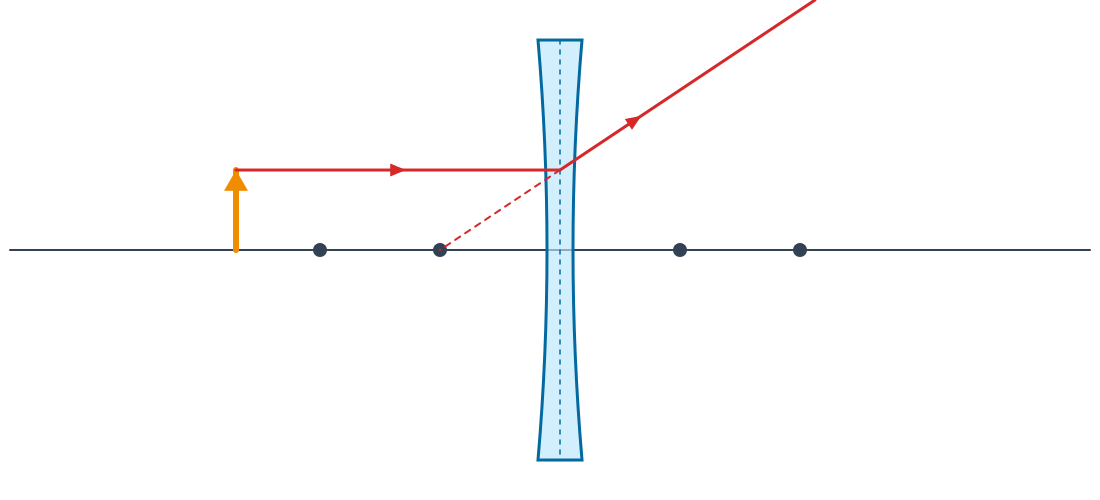
Ray 2 — Focal Ray
Aims toward F on the far side, then leaves the lens parallel.
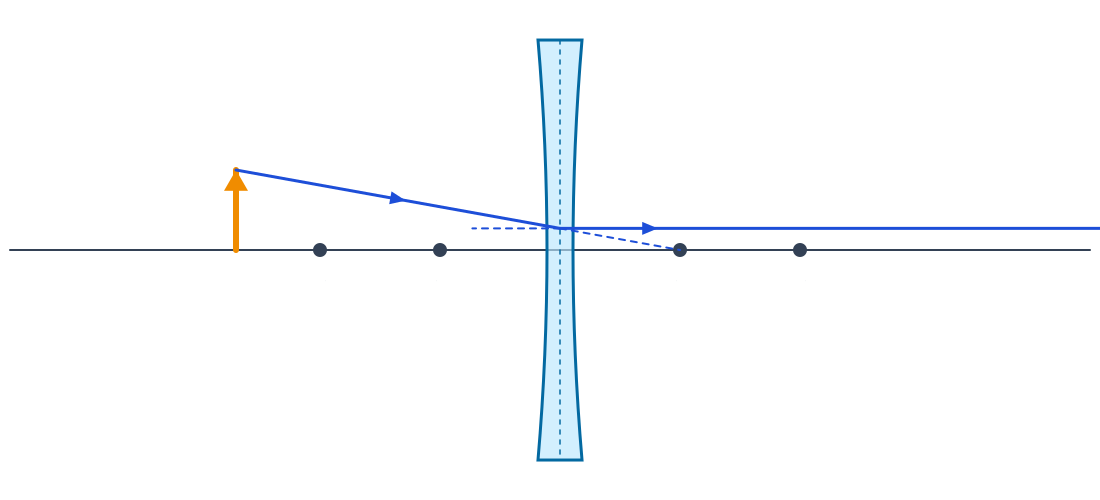
Ray 3 — Center Ray
Goes through the center of the lens without bending.
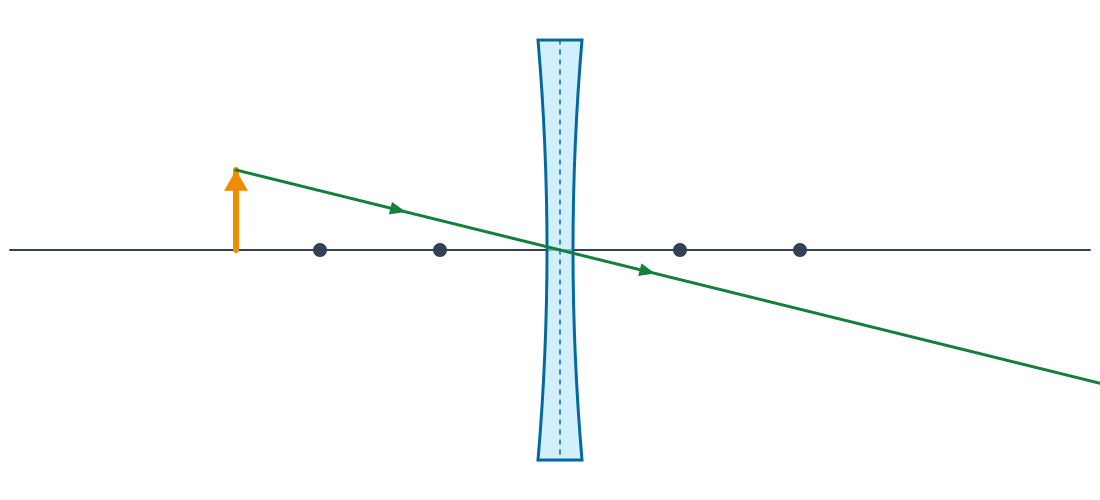
B. The Image Is Always the Same Type
Object far from the lens — click Next to draw it step by step.
Object close to the lens — click Next to draw it step by step.
Describe the image using L-O-S-T.
L: same side as the object, between F and the lens O: upright S: smaller T: Virtual
A diverging lens behaves just like a convex mirror. The only difference: the lens’s virtual image is on the same side as the object, while the mirror’s is behind the mirror.
Explore: Diverging Lens
Drag the orange object. Turn rays on and off with the check boxes.
C. Diverging Lenses at Work
Glasses for nearsightedness: the eye focuses light too soon. A diverging lens spreads the light a little so it focuses on the retina.
Door peepholes: a wide, upright view of the hallway.
Telescopes & binoculars: some designs use a diverging eyepiece.
Laser beam expanders: spread a narrow beam before it is re-focused.
Check Your Understanding
5 quick questions — pick an answer to see if you’re right.
1. A diverging lens is
2. A diverging lens always makes an image that is
3. A ray parallel to the principal axis passes through a diverging lens. It leaves the lens
4. Which vision problem is corrected with diverging lenses?
5. Which mirror forms images like a diverging lens does?