Physics Podcasts

Stream or Download — Listen on the Go

Long Island, NY • Mr. Mangiacapre

Show Me The Physics

Topic Review Dashboard

Show Me The Physics logo
Original Series

Show Me The Physics Podcasts

Short and deep-dive episodes on the physics behind everyday life and the people who discovered it. Press play to stream right away — nothing to download.

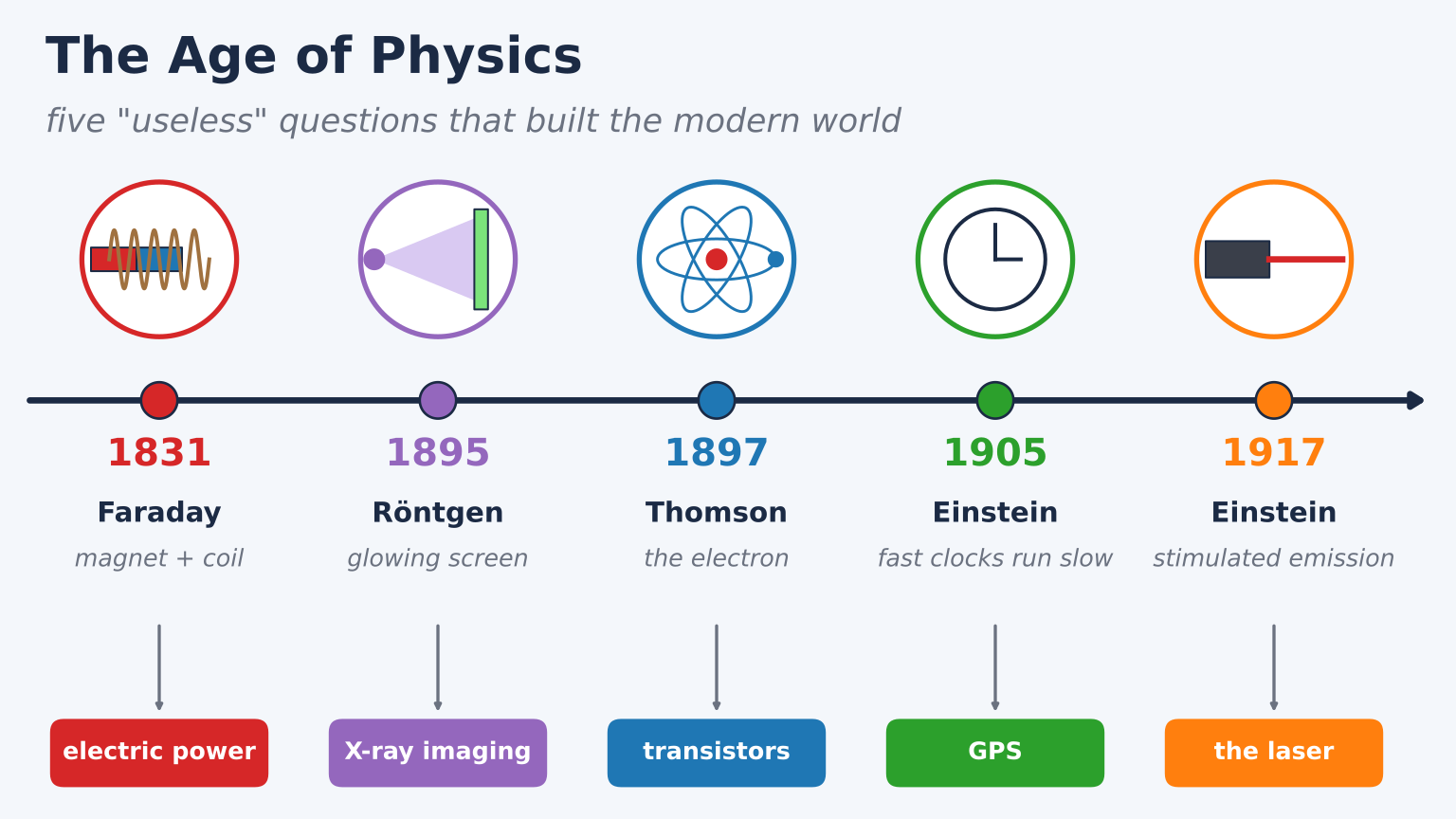
A timeline from Faraday (1831) to the laser, linking each discovery to a technology
Intro to Physics 12 min

The Age of Physics

Why are the last two centuries called the age of physics? Follow five questions that seemed useless when they were asked — Faraday’s magnet and coil, Röntgen’s glowing screen, Thomson’s electron, Einstein’s fast-running clocks, and stimulated emission — as they turn into electric power, X-rays, the transistor, GPS, and the laser. A companion to the reading passage of the same name.
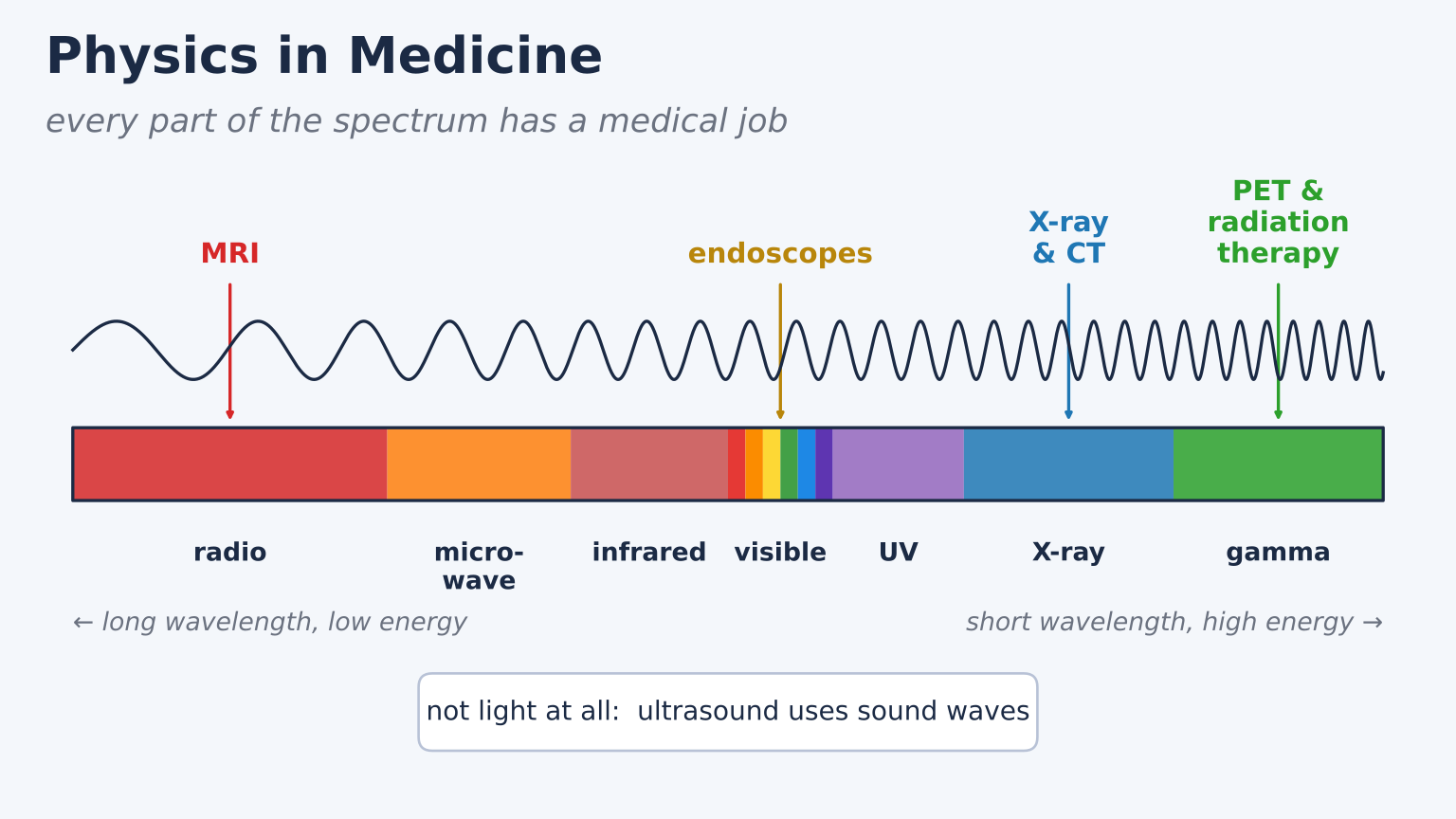
The electromagnetic spectrum labeled with medical uses: MRI, endoscopes, X-ray and CT, PET and radiation therapy; ultrasound uses sound
Medical Physics 15.5 min

A Beam of Hope: How Physics Changed Medicine

A high school physics teacher and an experienced physician explore how X-rays, C.T., M.R.I., P.E.T., ultrasound, particle accelerators, and more transformed diagnosis and treatment—and what focused ultrasound, FLASH radiotherapy, and theranostics may bring next.

Sources and further reading

Narrated with synthesized voices. Episode includes educational discussion, not personal medical advice.

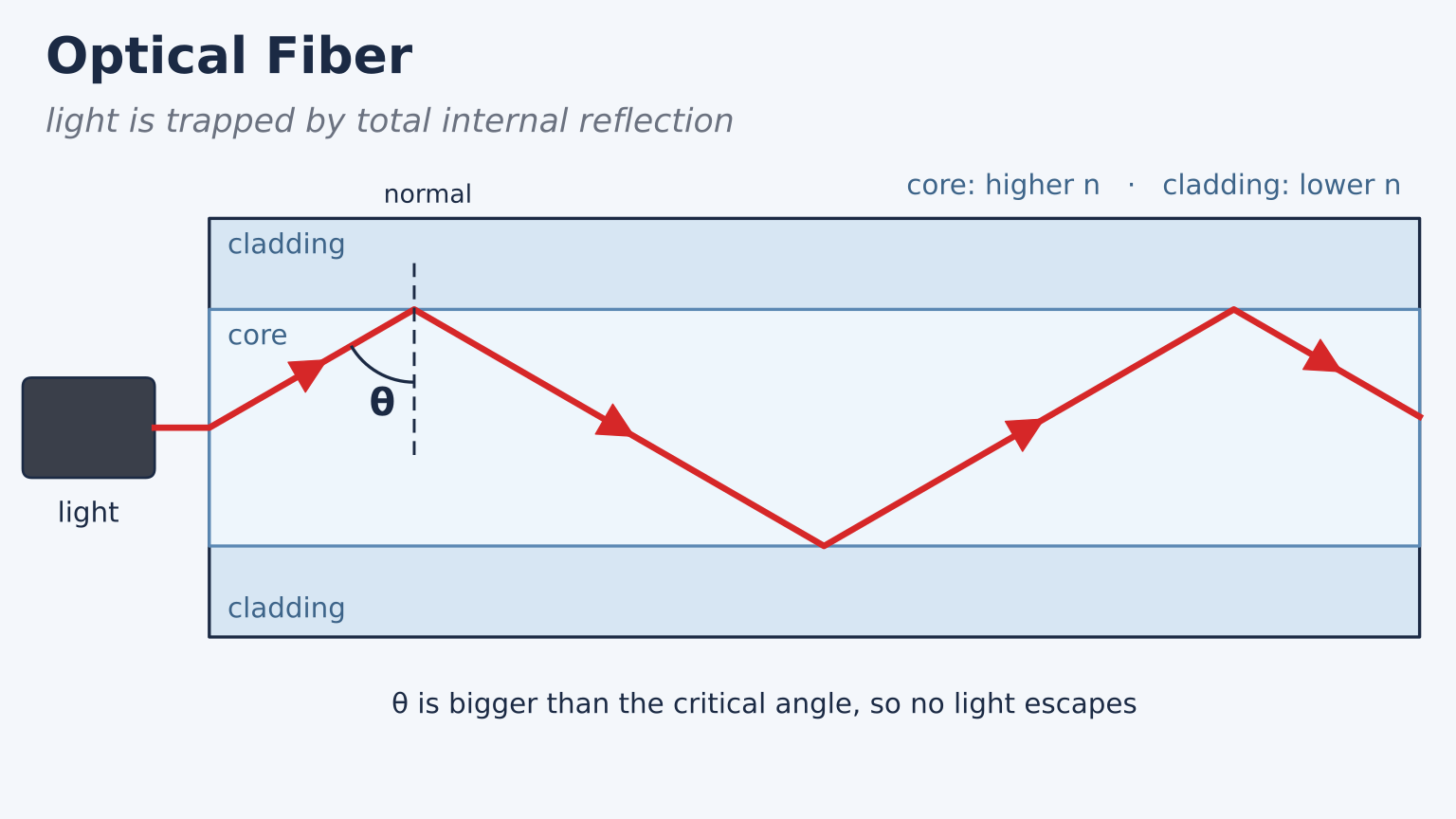
Light zig-zagging down an optical fiber by total internal reflection
Light & Optics 21 min

How Fiber Optics Replaced the Scalpel

A deep dive into how trapping light inside a thin strand of glass changed surgery. Thanks to total internal reflection, light can bounce down a bent fiber without escaping — letting doctors see inside the body through a tiny opening and perform procedures that once required a large incision.

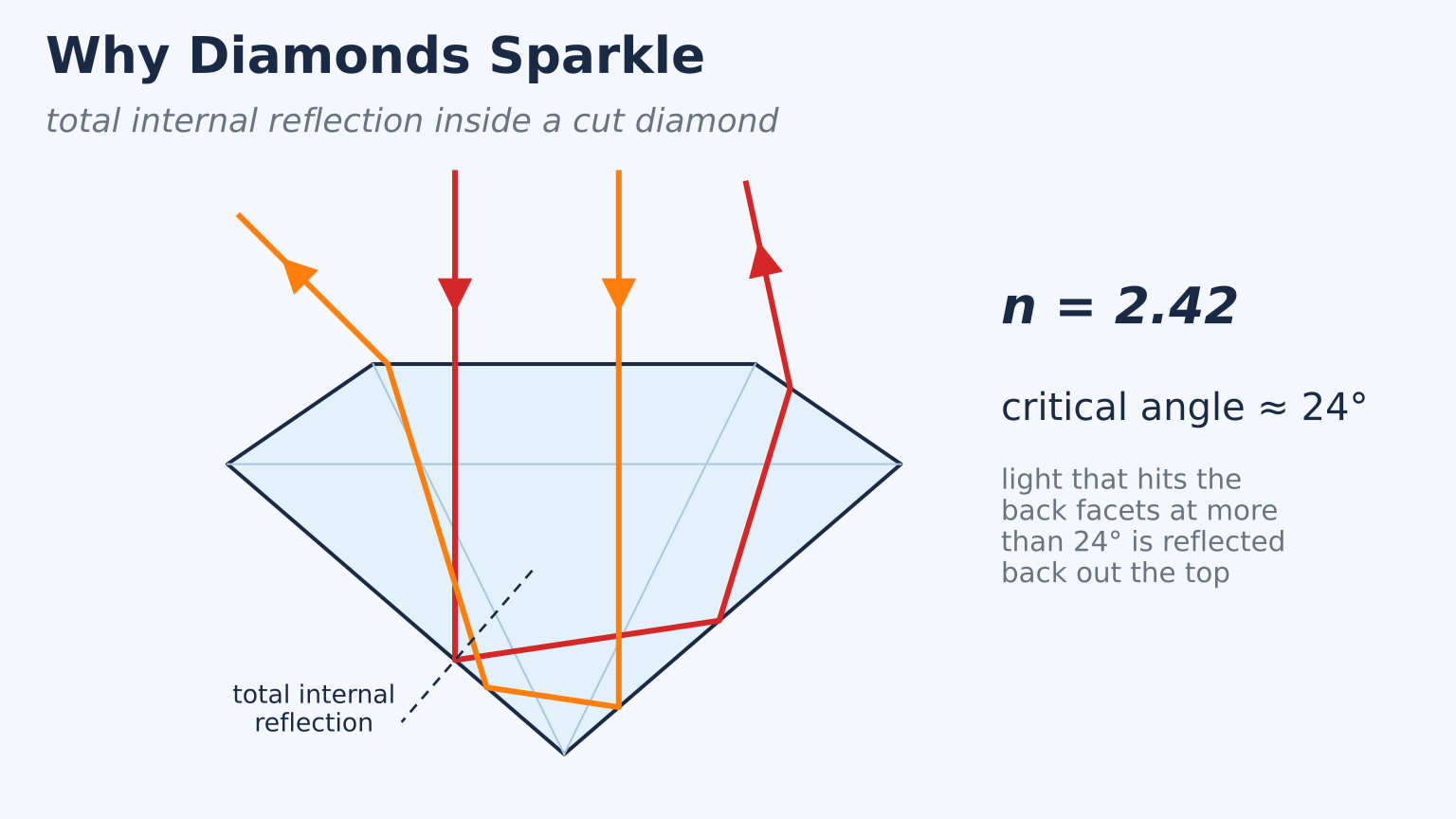
Light rays traced through a cut diamond, totally internally reflecting off the back facets
Light & Optics 5 min

Why Diamonds Sparkle: The Physics of Brilliance

Why does a diamond blaze with light while glass just shines? Diamond’s very high index of refraction (about 2.42) gives it a small critical angle (about 24°), so light entering the top is trapped by total internal reflection and bounced back out toward your eye.

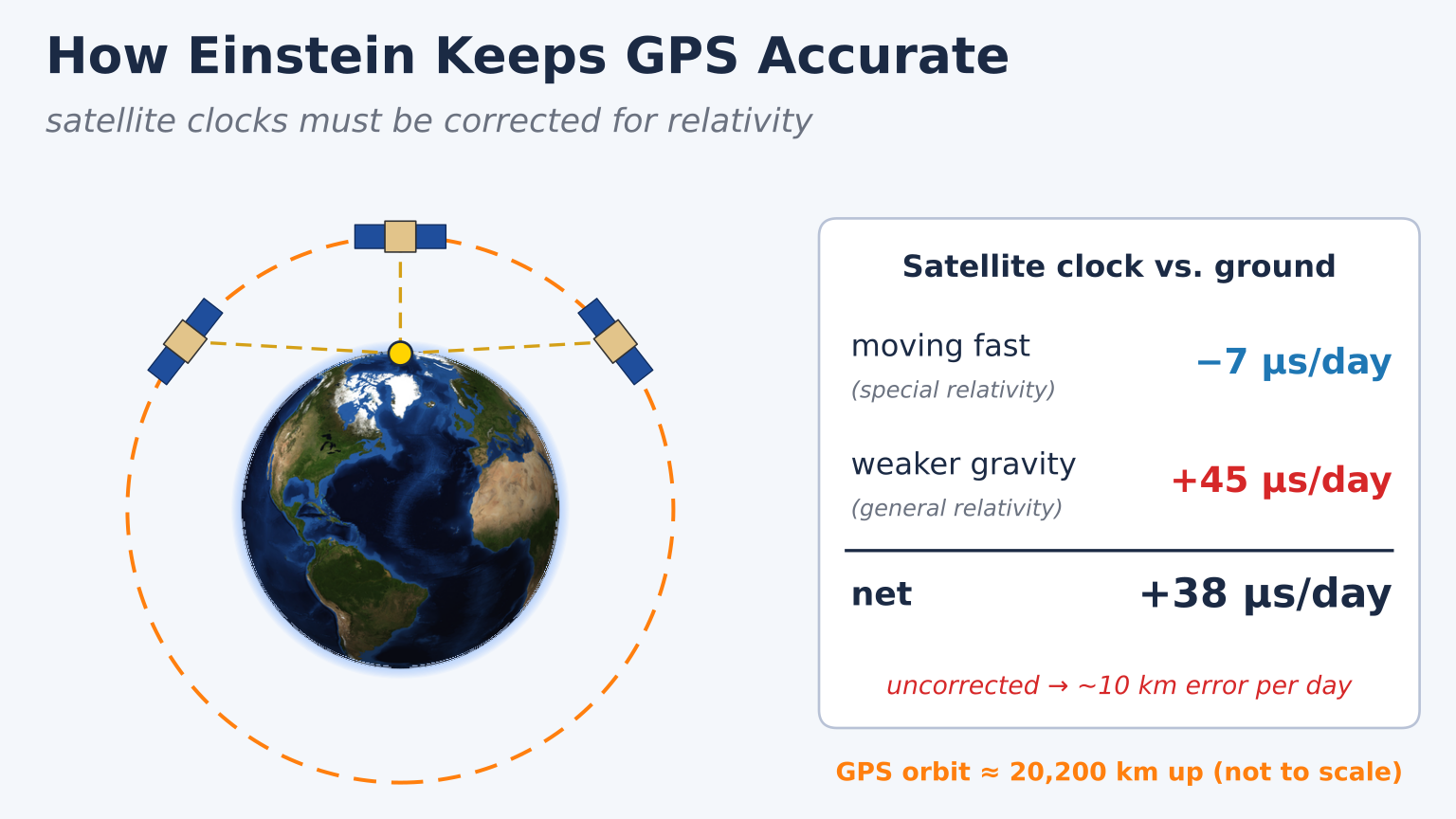
GPS satellites orbiting Earth with a table of relativity clock corrections
Relativity 6 min

How Einstein Keeps GPS Accurate

GPS satellites turn tiny time delays into distances, so their atomic clocks have to be nearly perfect. Speed makes them run about 7 μs/day slow (special relativity), weaker gravity makes them run 45 μs/day fast (general relativity) — ignore the 38 μs net and your map drifts over 10 km a day. Includes the story of the 1977 “Einstein switch” on the NTS-2 satellite.

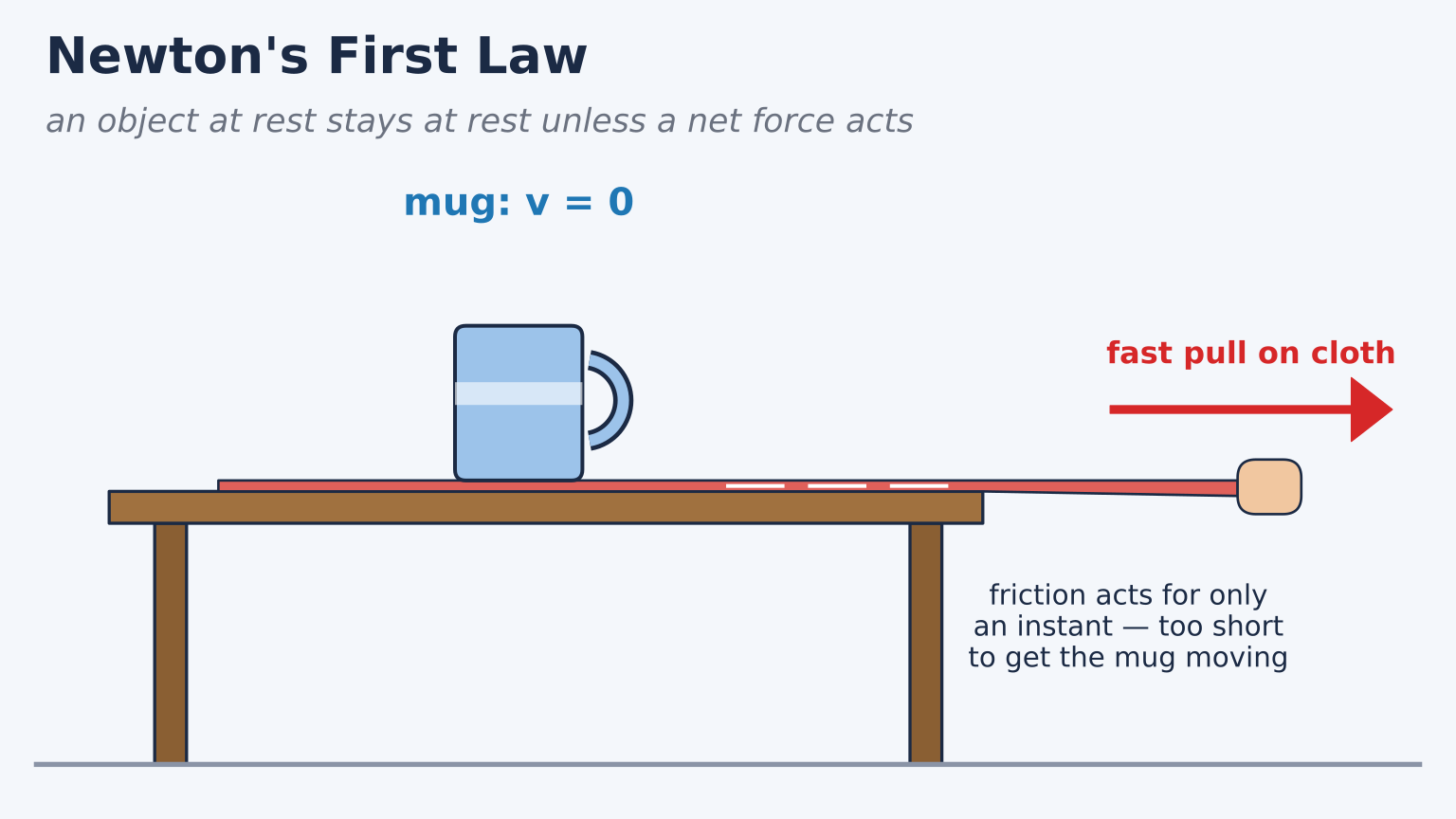
A tablecloth pulled quickly from under a mug that stays at rest
Forces 9 min

Newton’s First Law: Inertia and Motion

An AI-voiced deep dive into the law of inertia. When the net force is zero, an object at rest stays at rest and an object in motion keeps its speed and direction. Only an unbalanced force changes motion — so why do moving things seem to stop on their own?

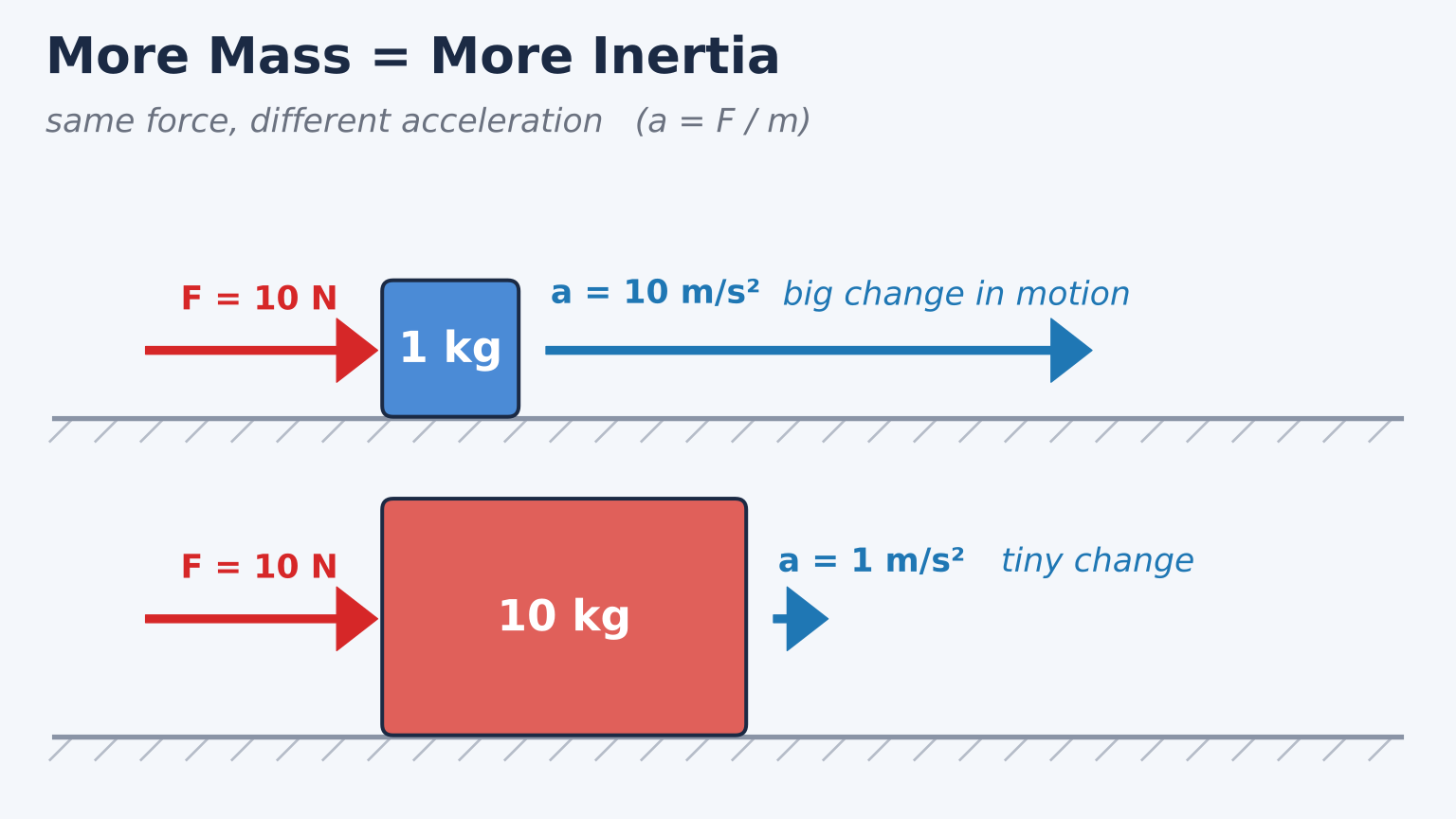
The same 10 N force gives a 1 kg block 10 m/s² and a 10 kg block 1 m/s²
Forces 9 min

Mass and Inertia

Why is it hard to start pedaling a bike from rest but easy to keep going? An AI-voiced discussion of inertia as resistance to a change in motion — and why more mass means more inertia, from ping-pong balls and golf balls to linemen and receivers.

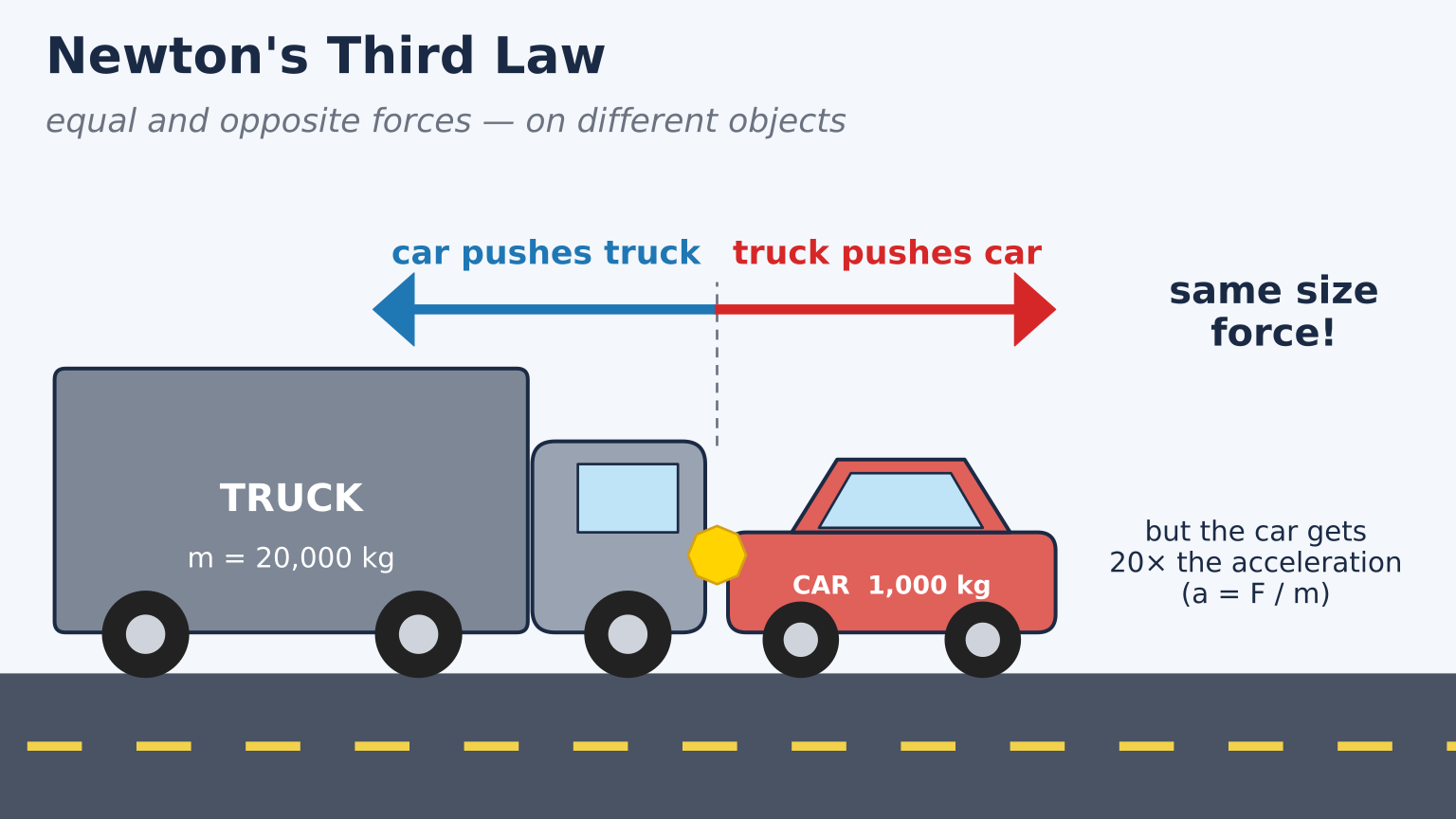
Truck and car colliding with equal and opposite force arrows
Forces 5 min

Newton’s Third Law: Truck vs. Car

When a truck hits a small car, which one feels the bigger force? Neither! This episode tackles the most common third-law misconceptions — why action–reaction pairs act on different objects and don’t cancel, and why equal forces can still produce very unequal results.

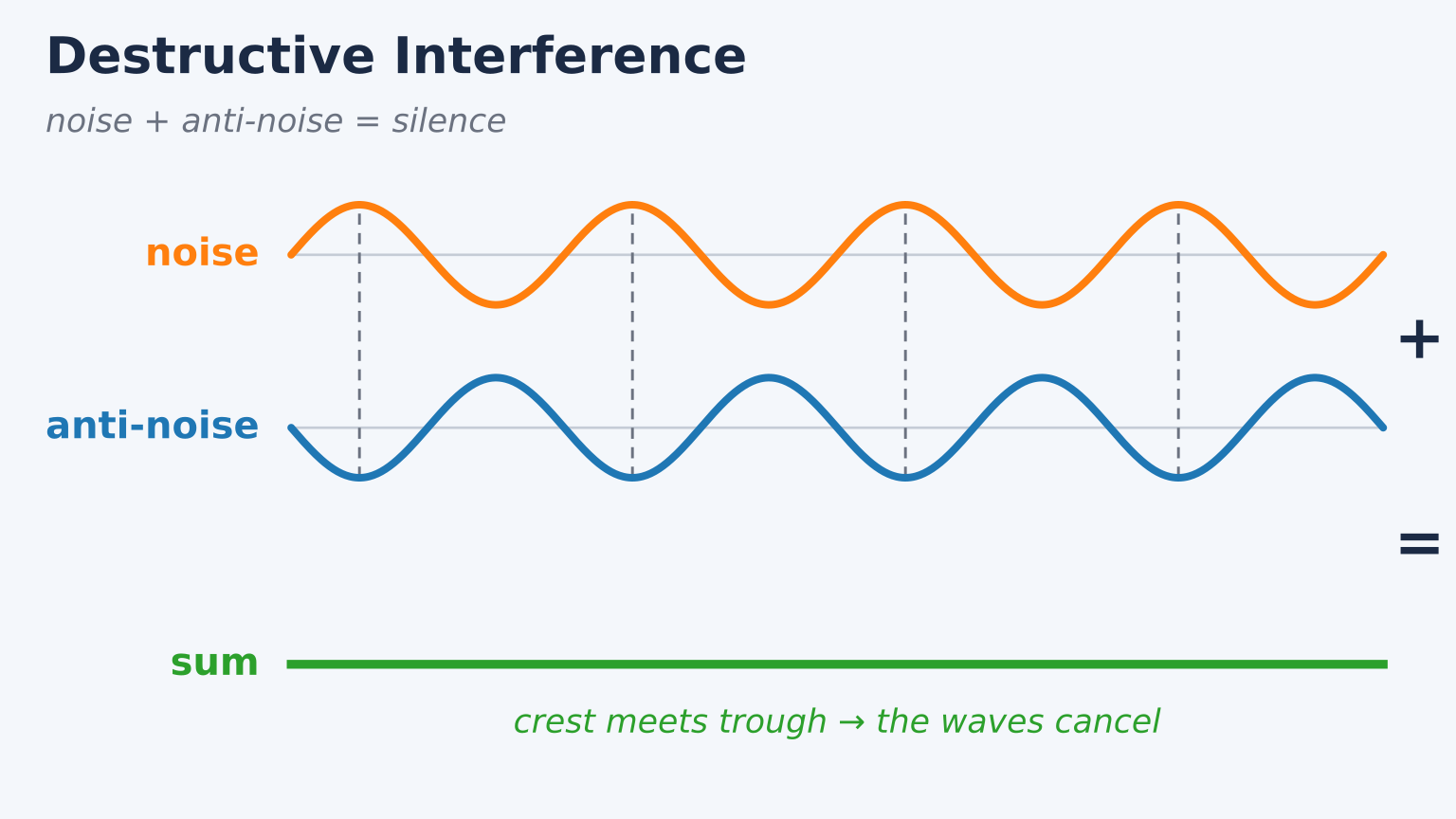
A noise wave plus its inverted anti-noise wave adds to a flat line
Waves & Sound 1.5 min

How Anti-Noise Creates the Illusion of Silence

Adding sound should make things louder — so how do noise-canceling headphones make noise disappear? A quick look at superposition and destructive interference: tiny microphones sample the noise and the headphones play its exact inverse, so compressions meet expansions and cancel.

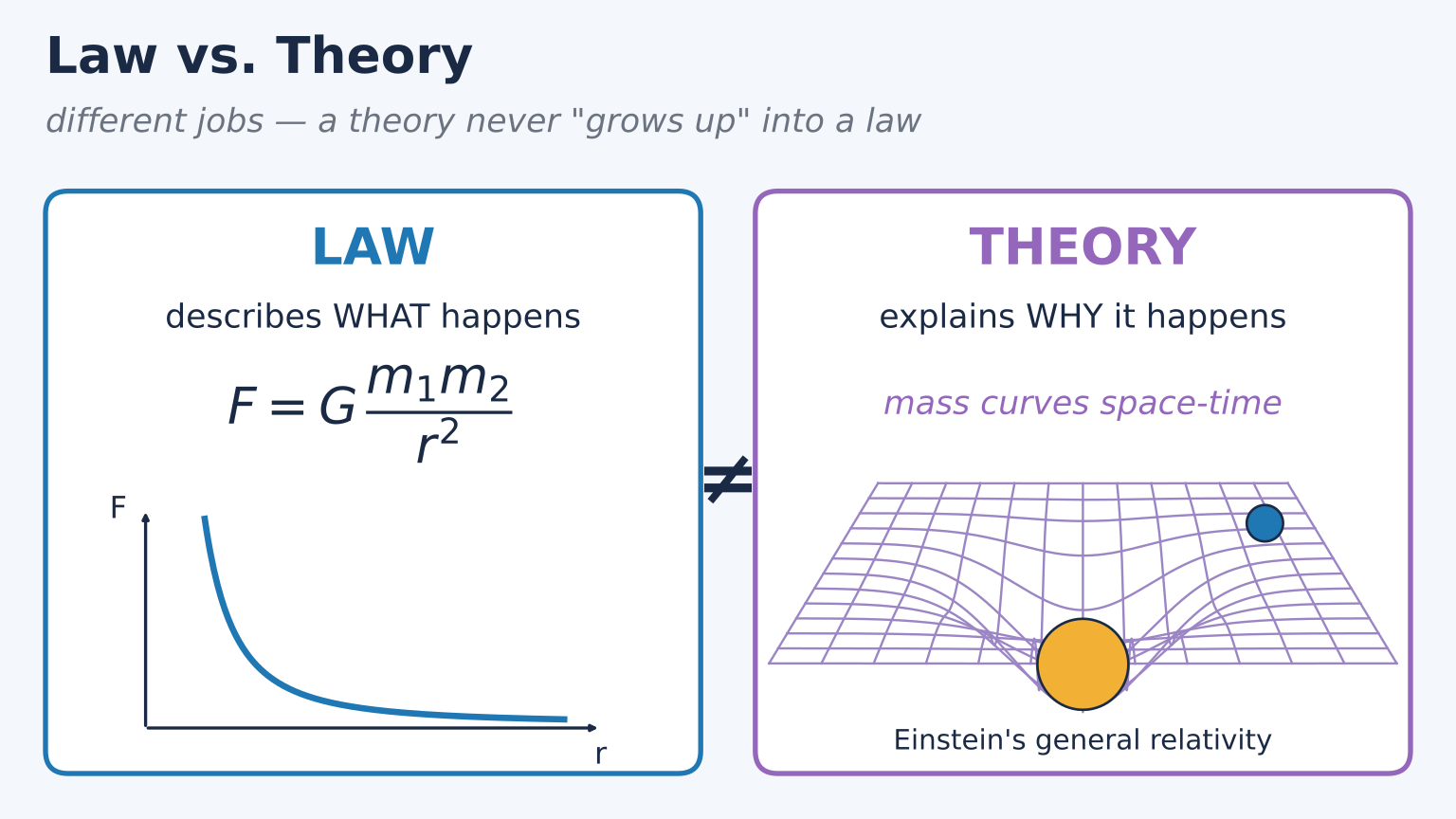
Law vs. theory: Newton's gravitation equation beside Einstein's curved space-time
Nature of Science 1.5 min

Why Theories Never Become Laws

“It’s just a theory” gets science backwards. A law describes what nature does (often as an equation), while a theory explains why it happens. They’re different tools, not steps on a ladder — so no amount of evidence turns a theory into a law.

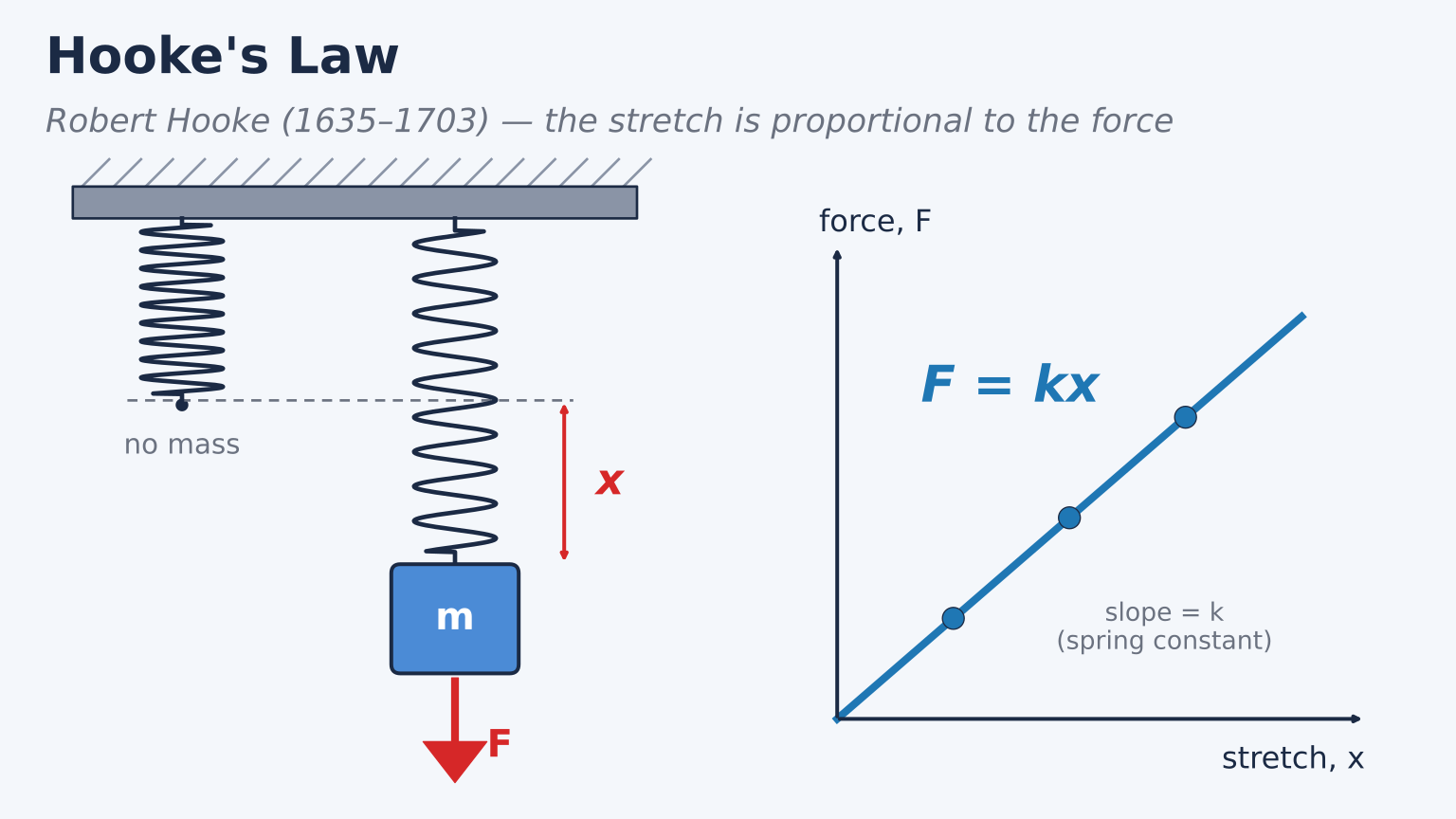
Hooke's law: a spring stretched by a mass and a straight-line graph of F = kx
Physics History 22 min

Why Isaac Newton Erased Robert Hooke

A deep dive into one of science’s bitterest rivalries. Hooke — of Hooke’s Law — clashed with Newton over light and over credit for the inverse-square law of gravity. After Hooke died, Newton led the Royal Society, and today not a single confirmed portrait of Hooke survives.

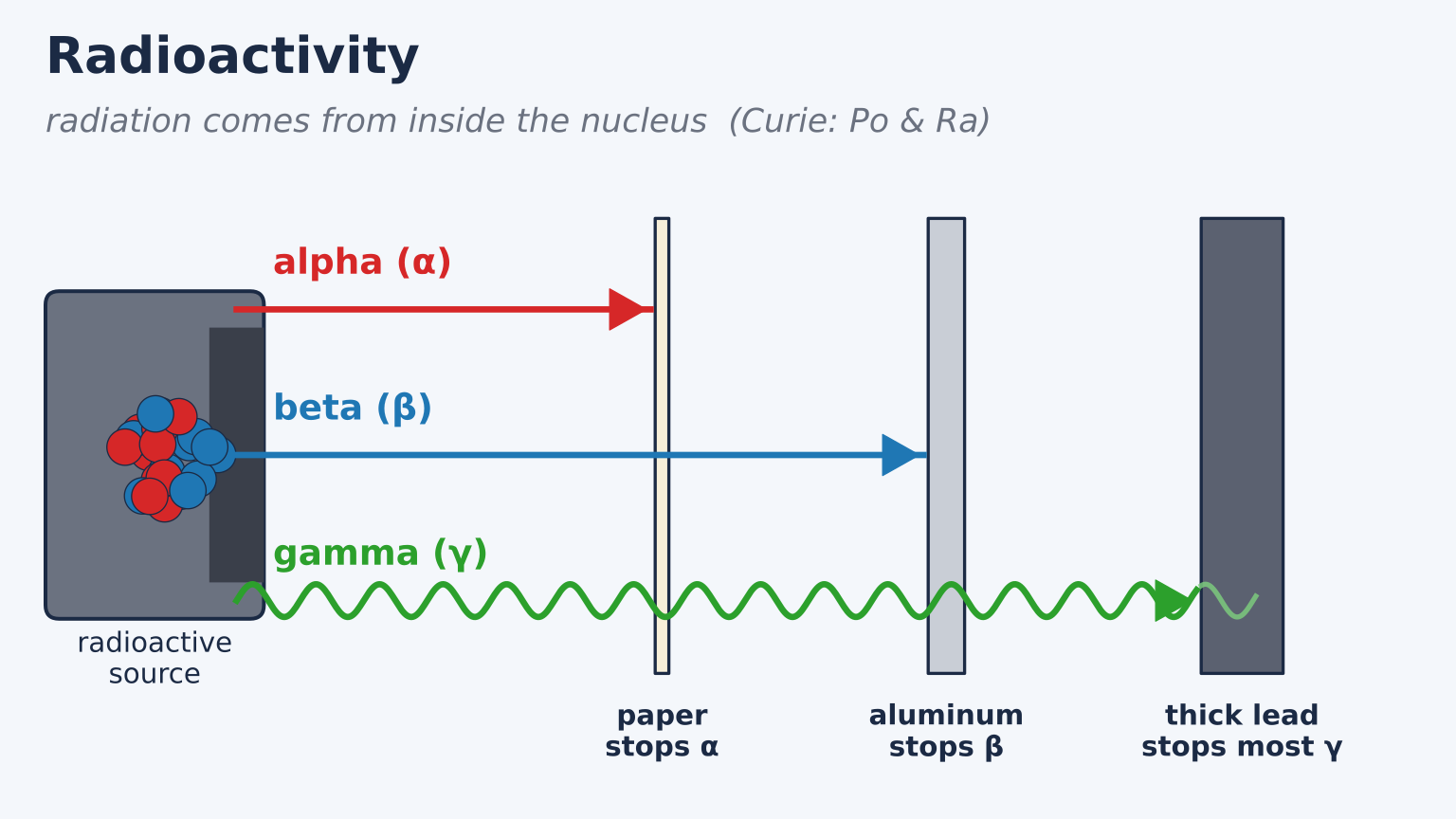
Alpha, beta, and gamma radiation stopped by paper, aluminum, and lead
Modern Physics 21 min

Marie Curie’s Radioactive Notebooks

Marie Curie’s lab notebooks are still radioactive more than a century later. This deep dive follows her from a leaky Paris shed to the discovery of polonium and radium, and explains her big idea: radioactivity comes from inside the atom itself — along with the price she paid for it.

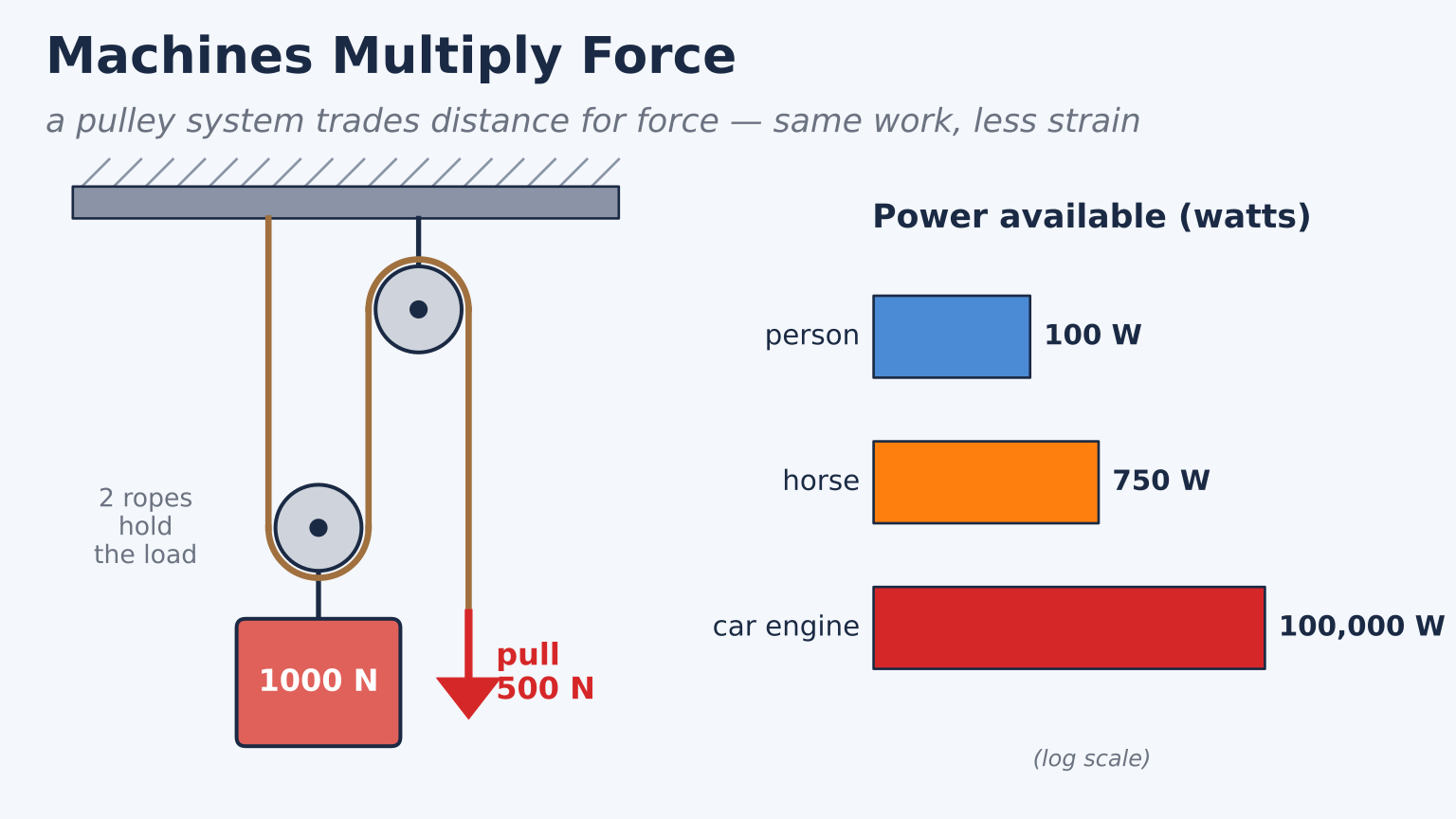
A pulley system halving the force needed, beside a power comparison of a person, a horse, and an engine
Science & Society 22 min

Trading Broken Hands for Broken Minds

Boxing gloves weren’t invented to protect the person getting hit — they were made to save the puncher’s hand. Newton’s third law fires the same force back into the 27 small bones of the fist, and the impulse–momentum theorem (FΔt = mΔv) shows how padding works like a haystack: stretch out the collision time and the peak force drops. From Roman spiked gloves to Jack Broughton’s 1743 “mufflers” to today’s 4 oz MMA gloves (which hit 4–5 times harder), this deep dive ends on a dark irony: protecting fighters’ hands freed them to punch full force at the head, swapping broken hands for brain injuries.

PODCAST DIRECTORY

Right-click and "Save As" to download any MP3 to your device.

Featured Media

Check out more lectures and university webcasts

Joel Fajans - U.C. Berkeley