Word Problems
Solving Problems Using the Motion Equations

Review - drag and drop the runners on the track to show constant velocity and acceleration
Fill In The Blanks NotesReview
Drag and drop the runners on the track below to show:
a) constant velocity b) acceleration
Video Instruction
showmethephysics.com
Problem-Solving Strategy

E. Solving Problems Using the Motion Equations
Ex 3
Starting from rest, an object accelerates at a rate of 12 m/s².
Find: the velocity of the object at the end of 3.0 seconds.
Ex 4
Tip: underline the given information in the problem.
An object at 100. m/s accelerates at a rate of 120. m/s².
Find: the velocity of this object after .100 seconds.
3 Ways to Have Non-Zero Acceleration
(to change velocity)
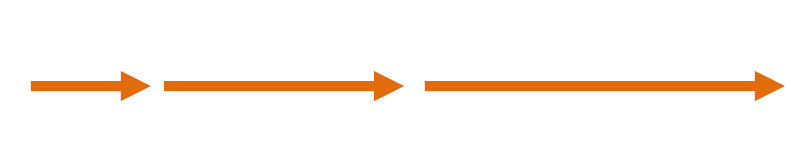
Speed Up

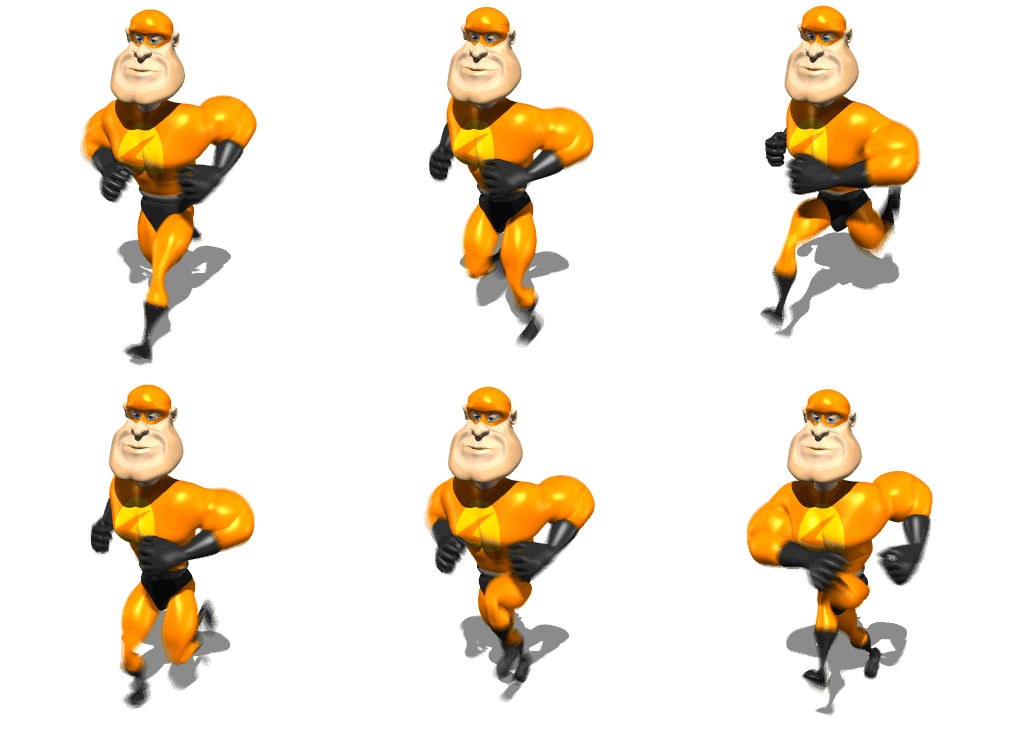
Slow Down
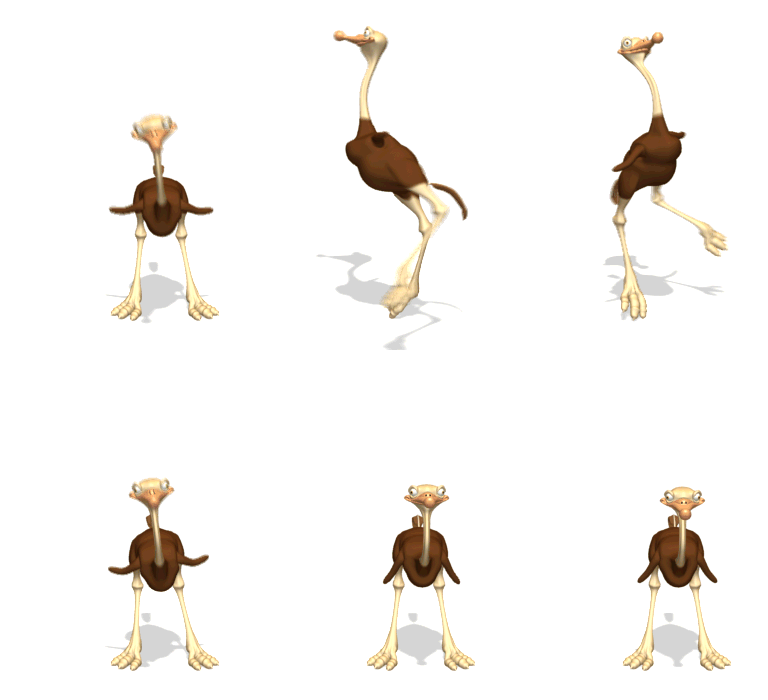
Change Direction
F. Motion Terms and Direction
A whole branch of mathematics is required to deal with numbers that have direction: Trigonometry. This is why it is important to know which motion information has direction.
Vector
A quantity that includes magnitude (a number) & direction.
ex) displacement, acceleration, velocity
Scalar

A quantity that includes magnitude (a number) only.
ex) time, distance, speed
Check Your Understanding
5 quick questions — pick an answer to see if you’re right.
1. Starting from rest, an object accelerates at 4.0 m/s² for 3.0 s. What is its final velocity?
2. An object moving at 50. m/s accelerates at 20. m/s² for 0.50 s. What is its final velocity?
3. Which quantity is a vector?
4. Which quantity is a scalar?
5. Which object is NOT accelerating?
How Long Must a Runway Be?
Airport engineers are designing a runway for a small jet. Starting from rest, the jet accelerates uniformly at 3.0 m/s² and must reach a takeoff speed of 72 m/s. If a problem occurs, the pilot can abort the takeoff and brake at 5.0 m/s².
What is the minimum distance the jet needs to reach takeoff speed?
▶ Want a challenge? Open 6 more Regents-style questions (harder · mixed formats)
Challenge score: 0 / 6
C1. While the jet is braking on the runway (moving forward), which row correctly describes the directions of its velocity and acceleration?
C2. Substitute numerical values into a mathematical representation that can be used to determine the time the jet needs to reach takeoff speed from rest. Then calculate the time.
C3. A student makes the following claim.
Place a check mark in either the Support or Refute box. Justify your response using a mathematical relationship.
C4. Safety rules require that a jet can reach takeoff speed and then abort and stop on the runway. Is a 1500-m runway long enough?
C5. A fully loaded version of the jet can accelerate at only 2.4 m/s². Determine the minimum distance it needs to reach the same 72 m/s takeoff speed from rest.
C6. On a wet runway, the jet can brake at only 2.5 m/s². Using a mathematical relationship, explain whether the 1500-m runway still meets the safety rule (reach 72 m/s, then abort and stop), and propose one design solution.