Refraction Equations lesson illustration


Which media is faster, Y or Lucite?

Refraction Equations lesson illustration


Explain This

Refraction Equations lesson illustration


The Physics of the Human Eye

image of Eye on retina

Graphic from dorling kindersley books website


Video Instruction

showmethephysics.com


Fill In the Blank Notes


D. Index of Refraction (n) – a comparison of speed of light in a substance to its speed in a vacuum


Refraction Equations lesson illustration


If a substance has an index of refraction of 2.00 it means light is twice as fast in a vacuum than it is in that medium


n = c/v


c = speed of light in a vacuum
(
3.00 x 10⁸ m/s)

    v = speed of light in a medium


Refraction Equations lesson illustration


nvacuum = 1.00  


nair ≈ 1.00  , v ≈ 3 x 10⁸ m/s


Which substance slows down light the most when light enters from air?


Diamond,

(highest (n) index of refraction)


least?


Water 


(smallest (n) index of refraction) 


Refraction Equations lesson illustration 

Any device with a lens refracts light


Ex 1) Speed of light in alcohol?    


n = 1.36 (Reference Table)


    n = 1.36 = c/v


1.36 = (3.00 x 10⁸ m/s)/V     


3.00 x 10⁸ m/s = 1.36V


    V = 2.21 x 10⁸ m/s


Magnifying glasses enlarge objects with refraction

Refraction Equations lesson illustration

http://www.freeimages.co.uk/


 n & v relationship?

n = c/v


Inverse


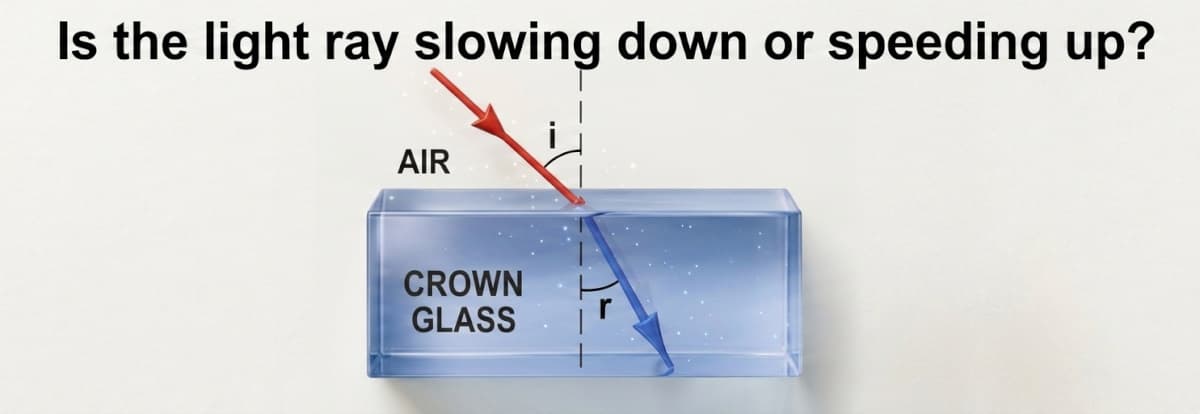
The more light is
 slowed down


or sped up,

the more
it changes direction


Refraction in Glass


Refraction Equations lesson illustration

The human eye refracts light


Refraction Equations lesson illustration


1. Prediction θref from θin

Refraction Equations lesson illustration


Refraction Equations lesson illustration


a. Snell's Law

n1sinθ1 = n2sinθ2


1 – incident medium


2 – refractive medium


Air/Lucite


n1sinθ1 = n2sinθ2


1.00 sin53 = (1.50) sinθ2  


.798 = 1.50sinθ2


.798/1.50 = sinθ2


.532 = sinθ2


(inverse sine .532)


θ2 = 320  


Ex) Light refracts as it moves from water to flint glass. Which angle is bigger, qin or qref?


Faster medium has bigger angle


Water 1.33?? or Flint glass 1.66??


Angle of Incidence bigger, Water faster


RankingRefraction Equations lesson illustration Task

Rank the media below from
fastest to slowest

Refraction Equations lesson illustration 


Fooling Drinkers With Refraction


More Refraction Equation
Instruction


Refraction Equations lesson illustration

Enrichment

NOVA (PBS) explains how refraction makes diamonds sparkle


Check Your Understanding

5 quick questions — pick an answer to see if you’re right.

1. A substance has an index of refraction of 2.00. What does this mean?

2. A material has an index of refraction of 1.50. What is the speed of light in it?

3. Light in air (n = 1.00) strikes glass (n = 1.50) at 30° from the normal. What is the angle of refraction? (sin 30° = 0.50)

4. How are a material's index of refraction (n) and the speed of light in it (v) related?

5. Light passes from water (n = 1.33) into flint glass (n = 1.66). Which angle is larger?

NYSSLS Regents Practice · Waves · Snell’s Law

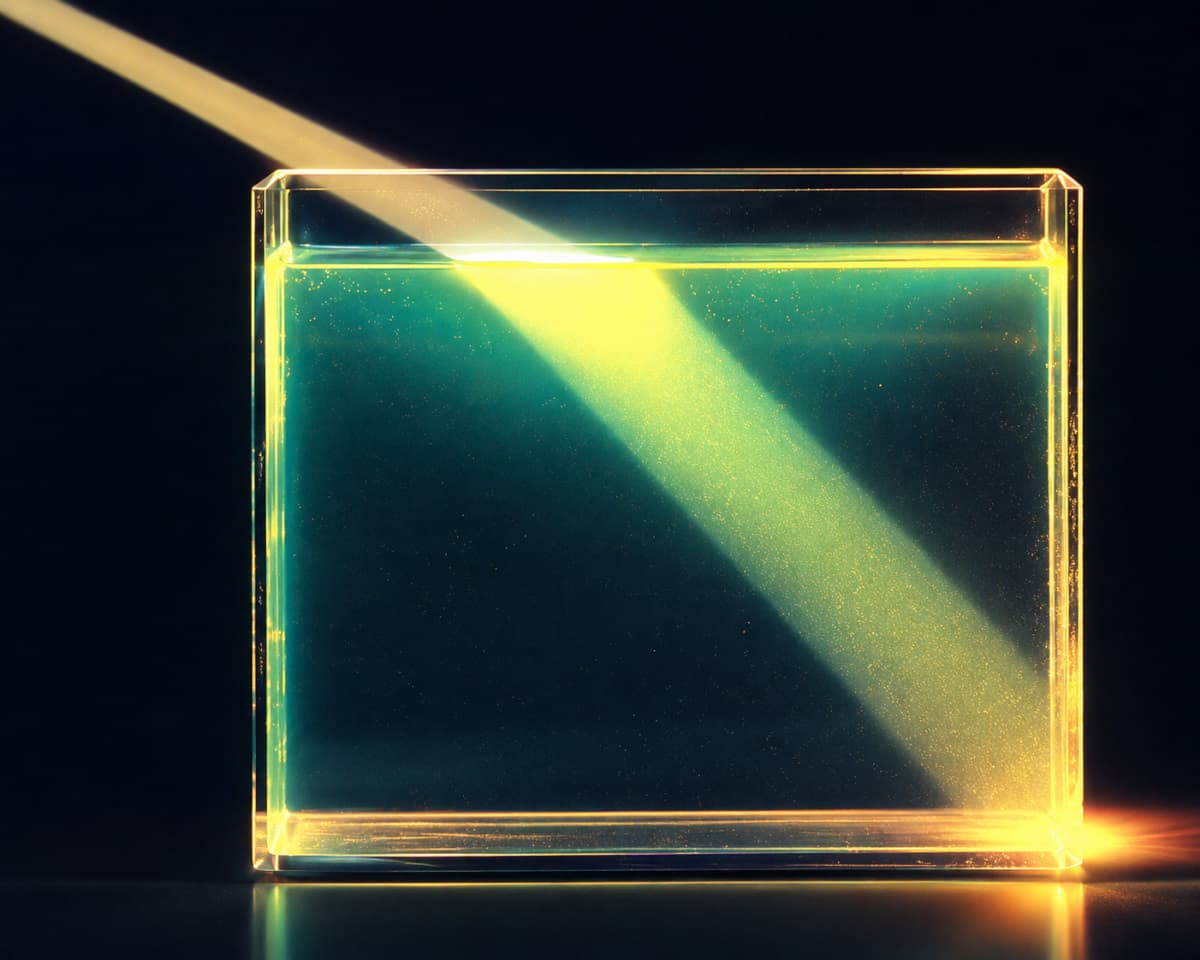
A Laser Into an Aquarium

A laser beam in air strikes the flat water surface of an aquarium with an angle of incidence of 30.°. The index of refraction of water is 1.33.

What is the angle of refraction in the water?

▶ Want a challenge? Open 6 more Regents-style questions  (harder · mixed formats)

Challenge score: 0 / 6

Support or Refute · Justify

C1. A student makes the following claim.

Claim: If the laser’s angle of incidence is doubled from 30.° to 60.°, the angle of refraction in the water also doubles, to about 44°.

Place a check mark in either the Support or Refute box. Justify your response using a mathematical relationship.

Multiple choice

C2. The laser beam continues from the water into the glass bottom of the tank (n = 1.52). How does it bend?

Substitute values

C3. The laser is tilted so that its angle of incidence on the water is 50.°. Substitute numerical values into a mathematical representation that can be used to determine the angle of refraction in the water. Then calculate the angle.

() sin (°) = () sin θ2, so θ2 = °
Determine the value

C4. For the original 30.° beam, the refracted ray (at about 22° in the water) continues to the flat glass bottom of the tank (n = 1.52). Determine the angle of refraction in the glass.

θglass = °
Multiple choice

C5. A beam goes from water into air at an angle of incidence of 30.°. What is the angle of refraction in air?

Constructed response

C6. A fish swims at the bottom of the aquarium. A spear aimed straight at the fish’s image would miss, but the laser aimed straight at the image hits the fish. Explain why.