1st Law of Motion
The Law of Inertia
Dynamics is the study of the relationship between force and motion. Open the full Dynamics notes →
Once the magnet is set in motion, why does it stay in motion?
Listen to an AI discussion of this lesson
1st Law — Law of Inertia
When Fnet = 0…
An object at rest…
…tends to stay at rest.
An object in motion…
…tends to stay in motion.
Balanced Forces

Unbalanced Forces

Identify all the unbalanced forces below
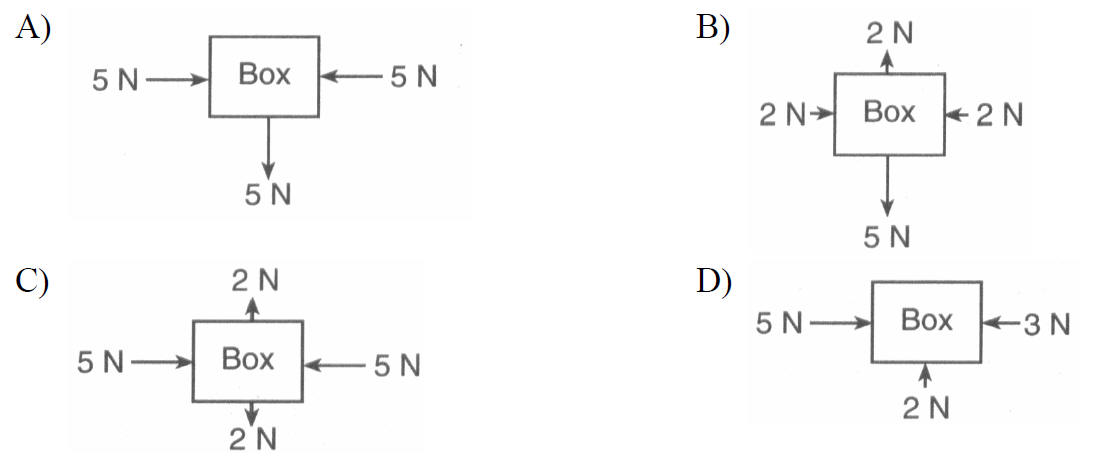
Explain This Using Newton's 1st Law
Why doesn't the ball roll backward after the cart stops and starts up again?
Inspired by Dr. Richard Feynman
Notice that at the exact moment the ball reaches the front of the cart, the cart instantly moves ahead at the same velocity it had previously. Therefore the ball never actually comes to rest — it maintains its "moving inertia." If there had been even the smallest time interval between when the ball reached the front of the wagon and when the wagon began moving again, we would have had different results: the ball would have bounced off the front of the wagon, and when the wagon continued forward, the ball would then have rolled to the back of the wagon at an even faster rate.
Watch the animation again, but this time follow the movement of the ball with a ruler — you'll see that once the ball starts moving, it never really stops moving.
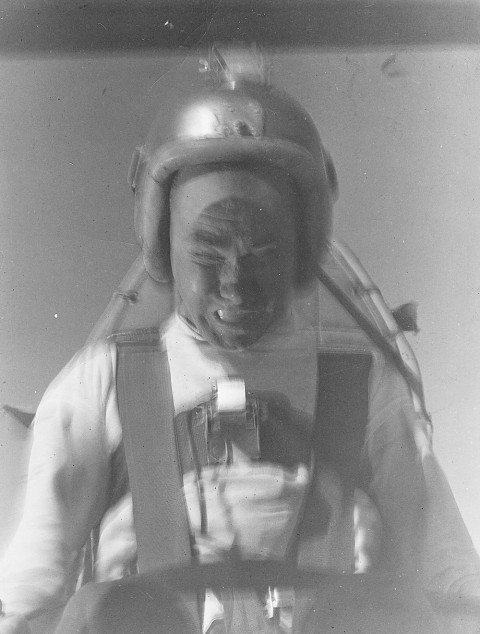
Sonic Wind I — John Paul Stapp, 1954

Stapp decelerating in the G-Whiz sled. This five-frame "movie" shows pretty well the stress he experienced. Courtesy EAFB History Office.
John Stapp stops short after traveling 421 mph. He suffered repeated and various injuries including broken limbs, ribs, detached retina, and miscellaneous traumas that eventually resulted in lifelong vision problems caused by permanently burst blood vessels in his eyes. In one of his final rocket-propelled rides, Stapp was subjected to 46.2 times the force of gravity.
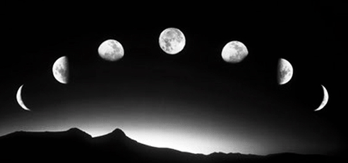
If an Object Changes Direction, It Must Have a Force on It
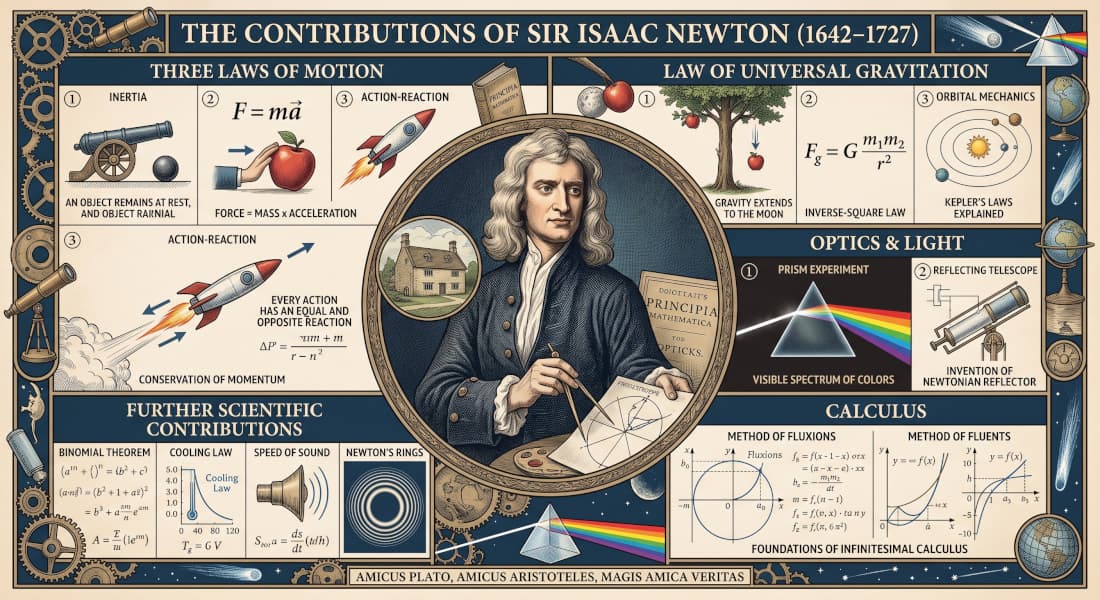
“The Moon must have a force on it.” — Isaac Newton
Mass and Inertia
What makes the world go 'round?