Mass & Inertia
1st Law of Motion
Inertia — an object's resistance to a change in motion due to its mass.

Listen to an AI discussion of this lesson
Try This at Home
Why does the ping pong ball accelerate more than the golf ball?
Newton's 2nd Law
When the Net Force > 0
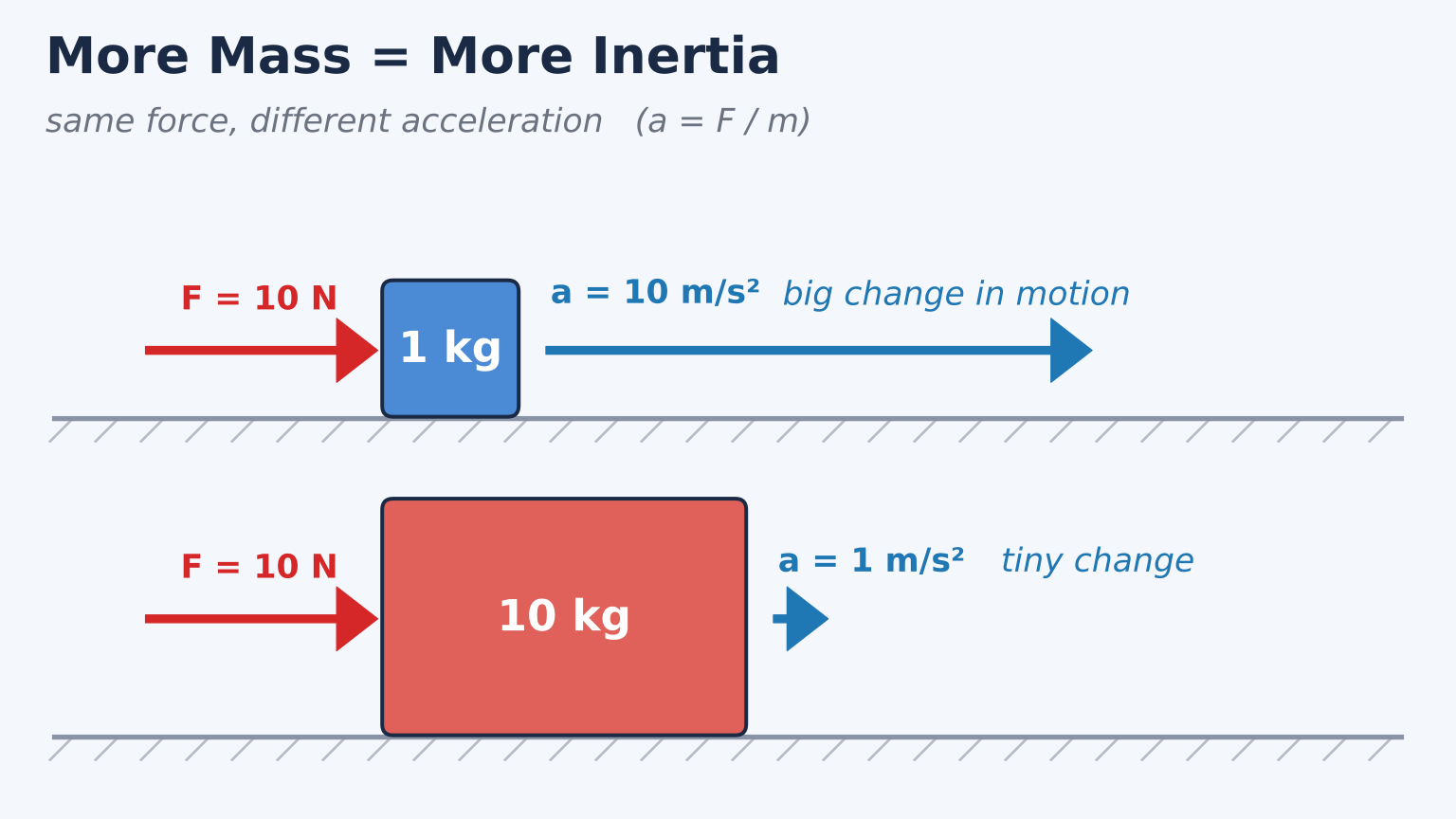
The acceleration of a body depends directly on the net force acting on it and indirectly on the body's mass.
Mass and Inertia

More Mass

Less Mass

Feeling Inertia
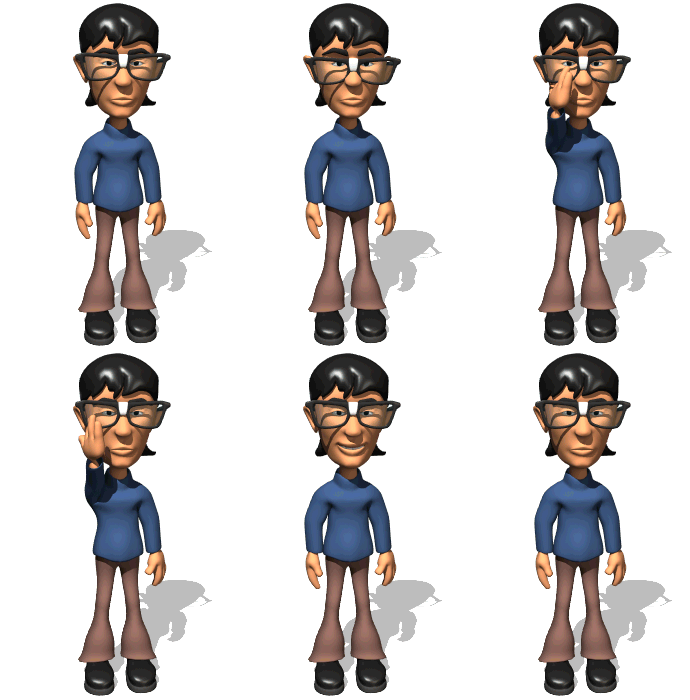
“Why is it initially so difficult to pedal a bike when you start from rest?”
“And why is it so easy to pedal the bike once you obtain your desired speed?”

Inertia — When you first start pedaling you are feeling the inertia of the bike and body. (force required to change motion)
Once in motion you only need to apply a force to offset friction.
“Why are the most massive (most inertia) football players lineman?”

“Why are the least massive (least inertia) football players receivers?”

“Receivers want to change motion, lineman want to hold their ground”
Simulations & Games
Show Me The Physics
Show Me The Physics
Egg Drop — Inertia in Action
Onsite Krampf
Ranking Task
Rank the carts below from greatest inertia to least. Explain your answer.

Check Your Understanding
5 quick questions — pick an answer to see if you’re right.
1. What is inertia?
2. If an object's mass is doubled, its inertia becomes…
3. The same force is applied to a ping pong ball and a golf ball. Which accelerates more, and why?
4. Why is it hard to start pedaling a bike from rest but easy once you are moving?
5. Which object has the greatest inertia?
The Tablecloth Trick
Students investigated the tablecloth trick, in which a cloth is pulled quickly from under dishes. Using identical cloths and the same quick pull, they recorded how far each object moved.
Table 1: Tablecloth Trial Results
| Object | Mass (kg) | Distance Moved (cm) |
|---|---|---|
| Plastic cup | 0.020 | 9.5 |
| Ceramic mug | 0.35 | 1.2 |
| Glass plate | 0.60 | 0.7 |
| Full water pitcher | 1.8 | 0.2 |
Which claim is best supported by the data?
▶ Want a challenge? Open 6 more Regents-style questions (harder · mixed formats)
Challenge score: 0 / 6
C1. A student makes the following claim.
Place a check mark in either the Support or Refute box. Justify your response.
C2. Aboard the International Space Station, two sealed boxes look identical and both float. How could an astronaut tell which has more mass?
C3. During the quick pull, the cloth exerts an average friction force of 1.2 N on the 0.60-kg glass plate. Determine the magnitude of the plate’s acceleration while the cloth slides beneath it.
C4. Place a check mark in two boxes to indicate the variables the students kept constant in this investigation.
C5. A student says, “The pitcher didn’t move because no force acted on it.” Which response is best?
C6. A restaurant owner wants to perform the tablecloth trick for customers. Using evidence from Table 1, identify which objects are safest to leave on the table, and describe one change to the cloth or the pull that would make the trick more successful.
