Curved Mirrors & Lenses
Focal point, focal length, and real vs. virtual images
Do Now: A plane mirror makes an image that is upright and the same size as you. Could a mirror ever make an image that is bigger than you? Upside down?
Yes — if the mirror is curved. Curved mirrors and lenses can make images that are larger, smaller, upright, or upside down, depending on where the object is.
A. Review: The Plane Mirror
A flat (plane) mirror always makes an image that is virtual, upright, and the same size as the object.
The image is as far behind the mirror as the object is in front: di = do.
B. Curved Mirrors
Concave Mirror
The reflecting surface caves in, like the inside of a spoon.
It is a converging mirror: parallel rays reflect and come together.
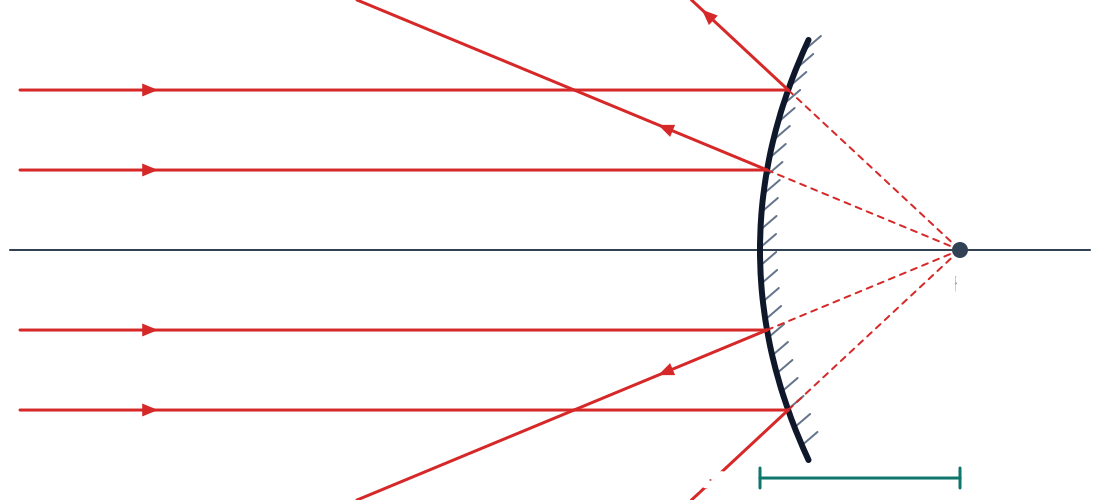
Convex Mirror
The reflecting surface bulges out, like the back of a spoon.
It is a diverging mirror: parallel rays reflect and spread apart.
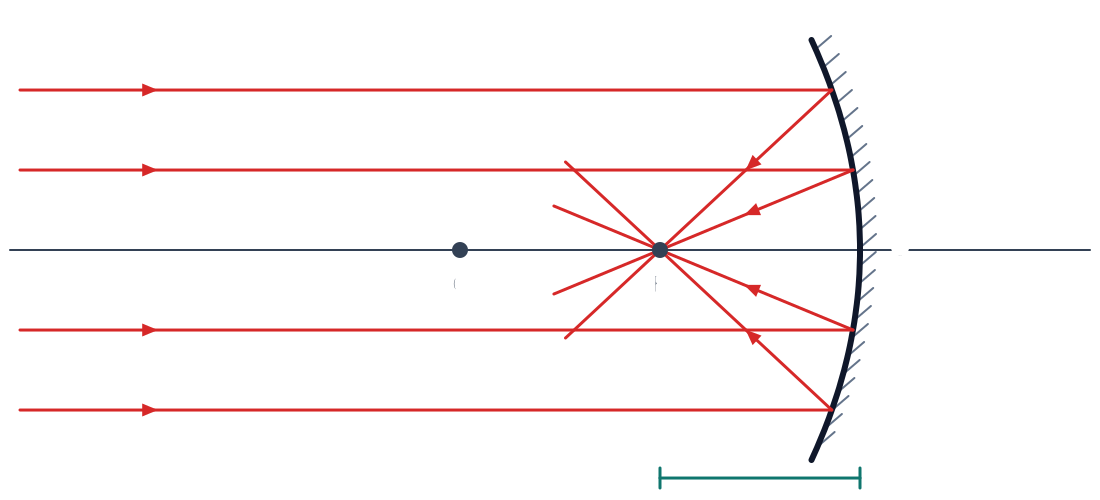
Principal axis — the line through the center of the mirror, perpendicular to its surface.
Vertex (V) — the center of the mirror’s surface, where the principal axis meets it.
Focal point (F) — the point where rays parallel to the principal axis meet after reflecting.
Focal length (f) — the distance from the mirror to the focal point.
Center of curvature (C) — the center of the sphere the mirror was cut from. It sits at twice the focal length.
Radius of curvature (R) — the distance from the mirror to C, so R = 2f.
C. Lenses
A lens bends (refracts) light as it passes through. Every lens has a focal point on each side, the same distance f from the lens.
Converging Lens
Thicker in the middle (biconvex).
Parallel rays bend toward each other and meet at F on the far side.
Diverging Lens
Thinner in the middle (biconcave).
Parallel rays bend away from each other, as if they came from F on the near side.
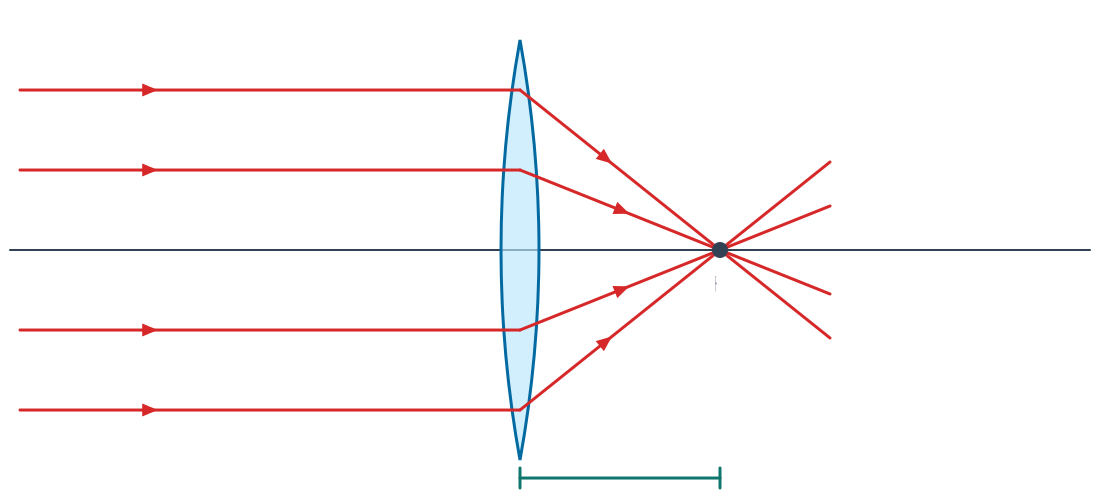
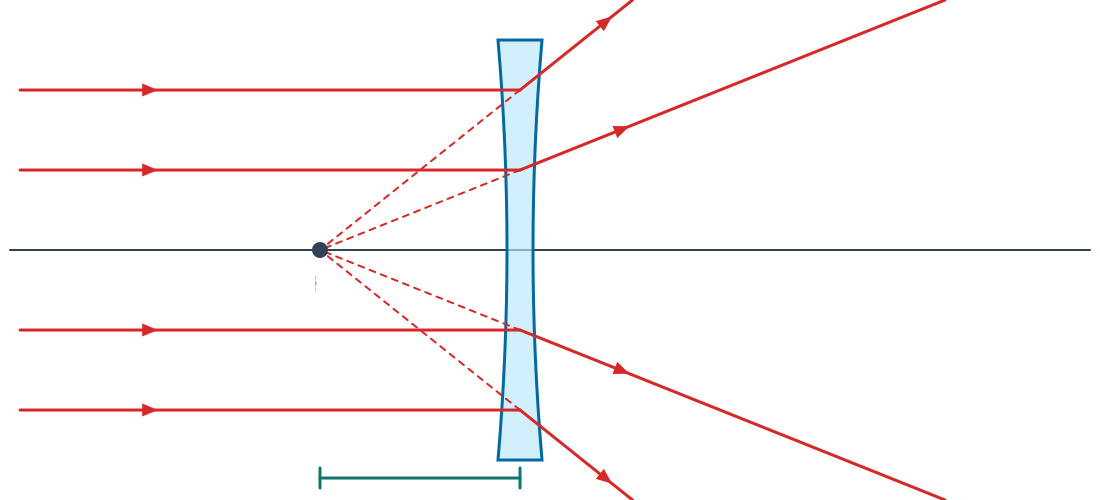
Concave mirrors and convex (fat-middle) lenses converge light. Convex mirrors and concave (thin-middle) lenses diverge light. Mirrors and lenses with the same name do opposite things!
D. Real vs. Virtual Images
Real Image
Light rays actually meet at the image.
Can be projected onto a screen.
Inverted (upside down) for a single mirror or lens.
Virtual Image
Light rays only appear to come from the image.
Cannot be projected onto a screen.
Upright for a single mirror or lens.
E. Describing an Image
L — Location: Where is it? (Between F and C? Behind the mirror?)
O — Orientation: Upright or inverted?
S — Size: Larger, smaller, or the same size as the object?
T — Type: Real or virtual?
Use L-O-S-T to describe your image in a plane mirror.
L: as far behind the mirror as you are in front O: upright S: same size T: virtual
Check Your Understanding
5 quick questions — pick an answer to see if you’re right.
1. Rays parallel to the principal axis reflect off a concave mirror. Where do they meet?
2. A concave mirror has a radius of curvature of 40 cm. What is its focal length?
3. Which lens is thicker in the middle than at its edges?
4. Which kind of image can be projected onto a screen?
5. Which pair of devices both make parallel light rays spread apart?