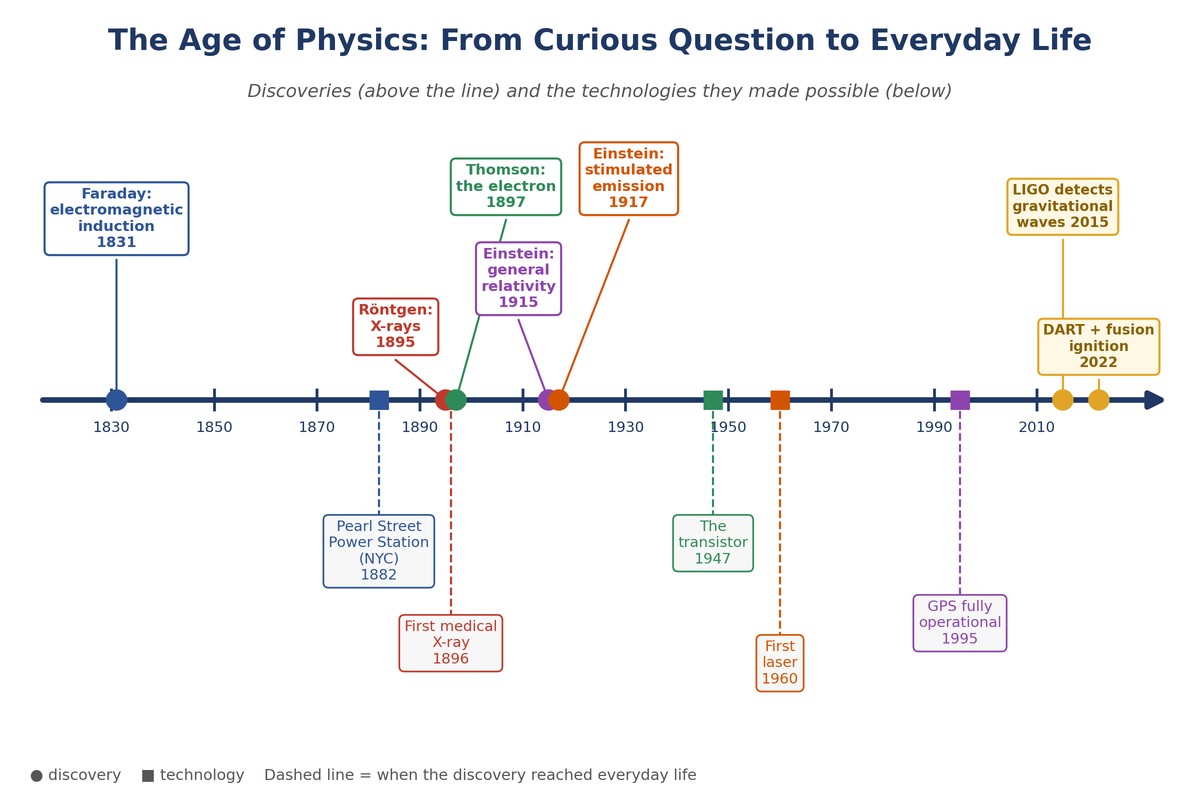
Intro to PhysicsThe Age of Physics: Five Strange Questions That Built the Room You’re Sitting InLook around the room you’re sitting in — almost everything in it began as a question that seemed useless when it was asked. Follow Faraday’s magnet and coil to the power grid, Röntgen’s glowing screen to the hospital, Thomson’s electron to your phone, and Einstein’s fast-running clocks to GPS, then meet the experiments still happening in your lifetime. Includes a timeline, diagrams, and discovery-to-technology data. 3 multiple-choice and 3 extended-response questions.Open Reading Passage
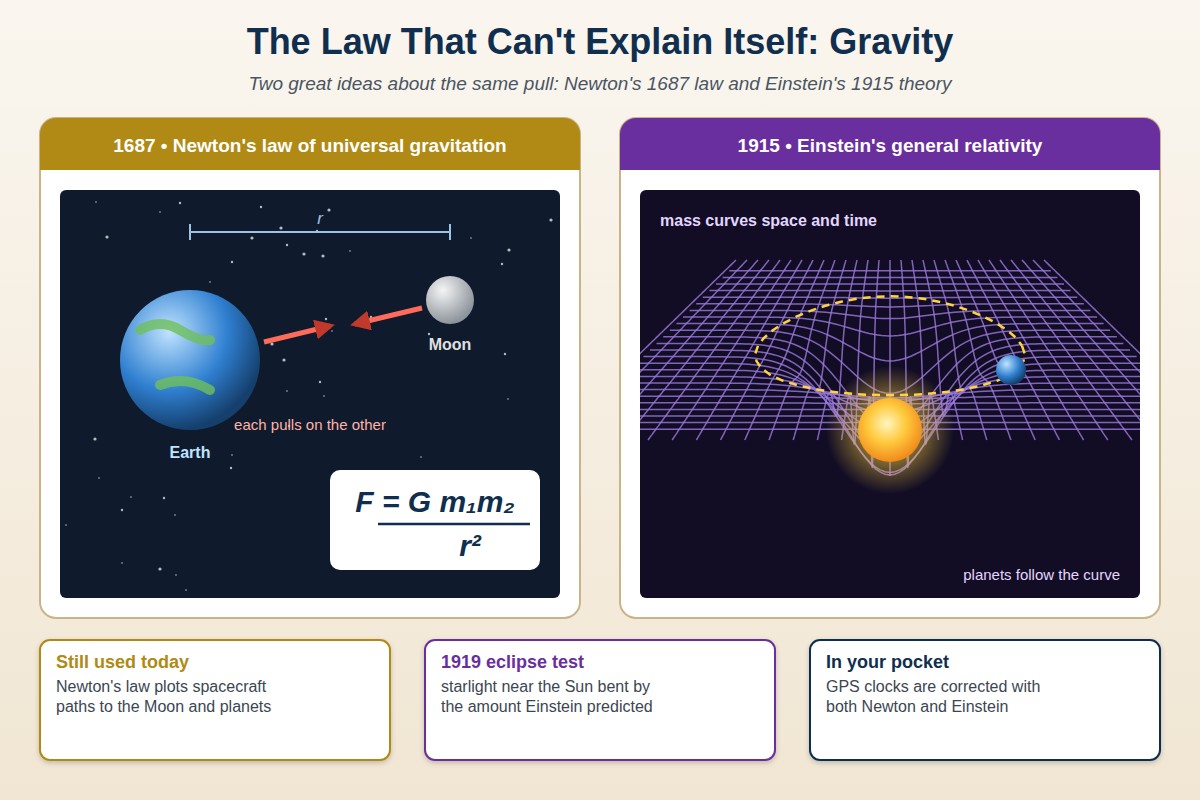
Intro to PhysicsThe Law That Can't Explain Itself: Gravity and the Biggest Myth in ScienceIsaac Newton could calculate gravity perfectly and still admitted he had no idea why it happened — "I frame no hypotheses." Students unpack the real difference between a scientific law and a scientific theory, from Newton's law of gravitation to Einstein's general relativity and the 1919 eclipse that proved it, ending with the GPS satellite in your pocket that needs both to work.Open Reading Passage
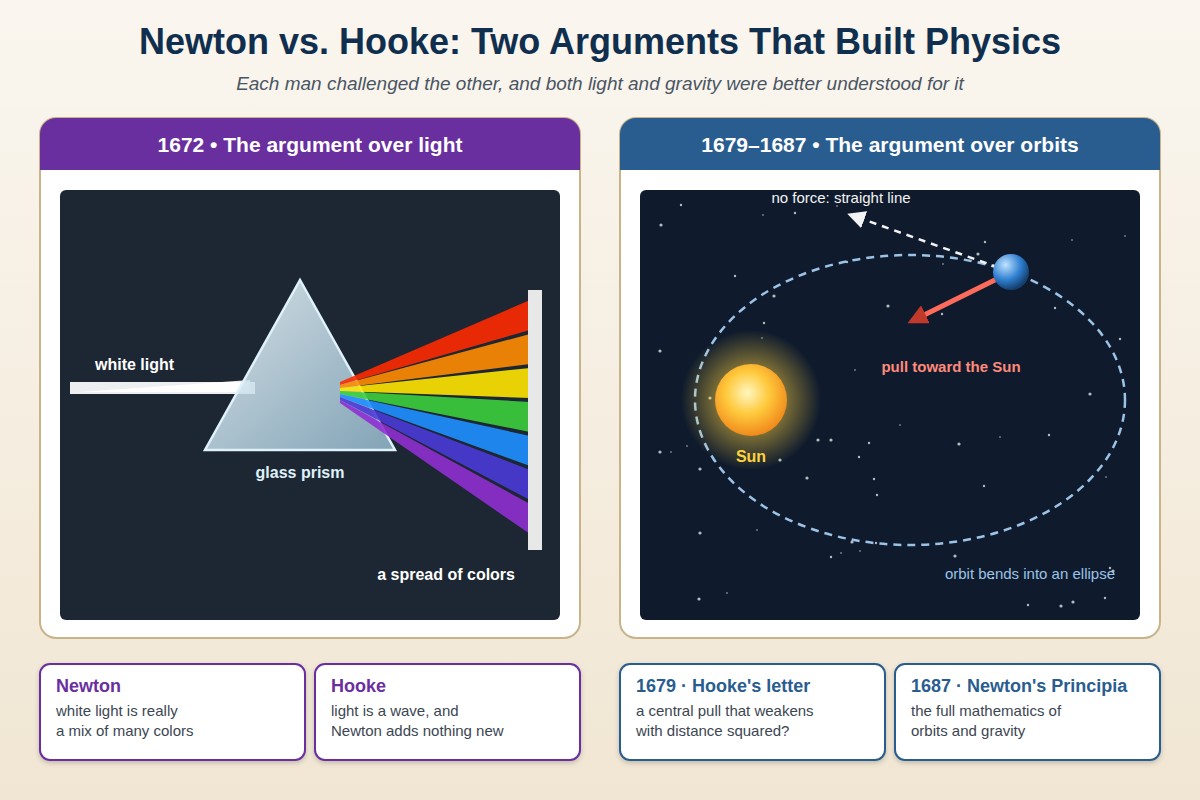
Intro to PhysicsThe Shoulders of Giants: Newton, Hooke, and the Rivalry That Forged Modern PhysicsTwo brilliant, prickly rivals — one relentless with a microscope and a spring, the other unstoppable with a pen and a proof — whose feuds over light and gravity became an unlikely lesson in how a scientific claim is supposed to be challenged.Open Reading Passage
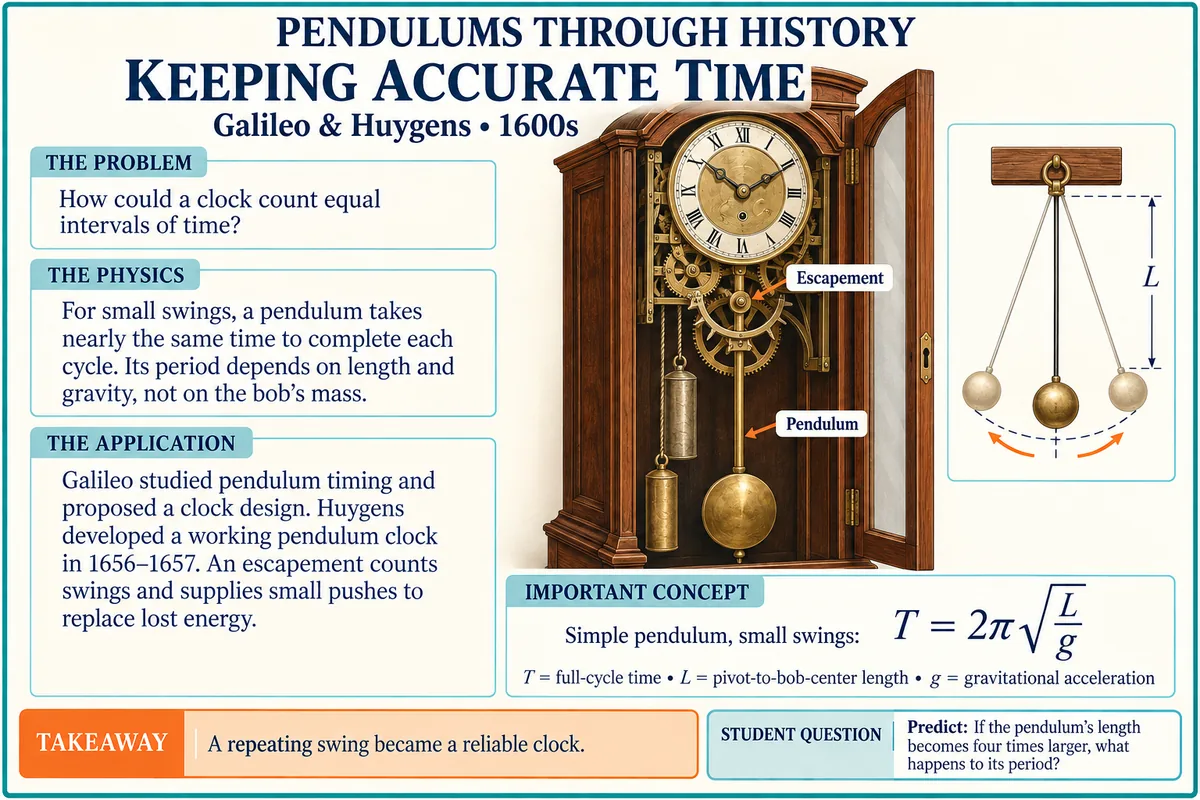
Intro to PhysicsThe Pendulum Through History: How a Simple Swing Changed ScienceOne simple device, six turning points in science — from a bronze seismoscope that caught an earthquake no one felt, to Galileo timing a swaying chandelier, to Foucault proving Earth turns without ever looking at the sky. A one-period reading with 2 multiple-choice and 4 extended-response questions.Open Reading Passage