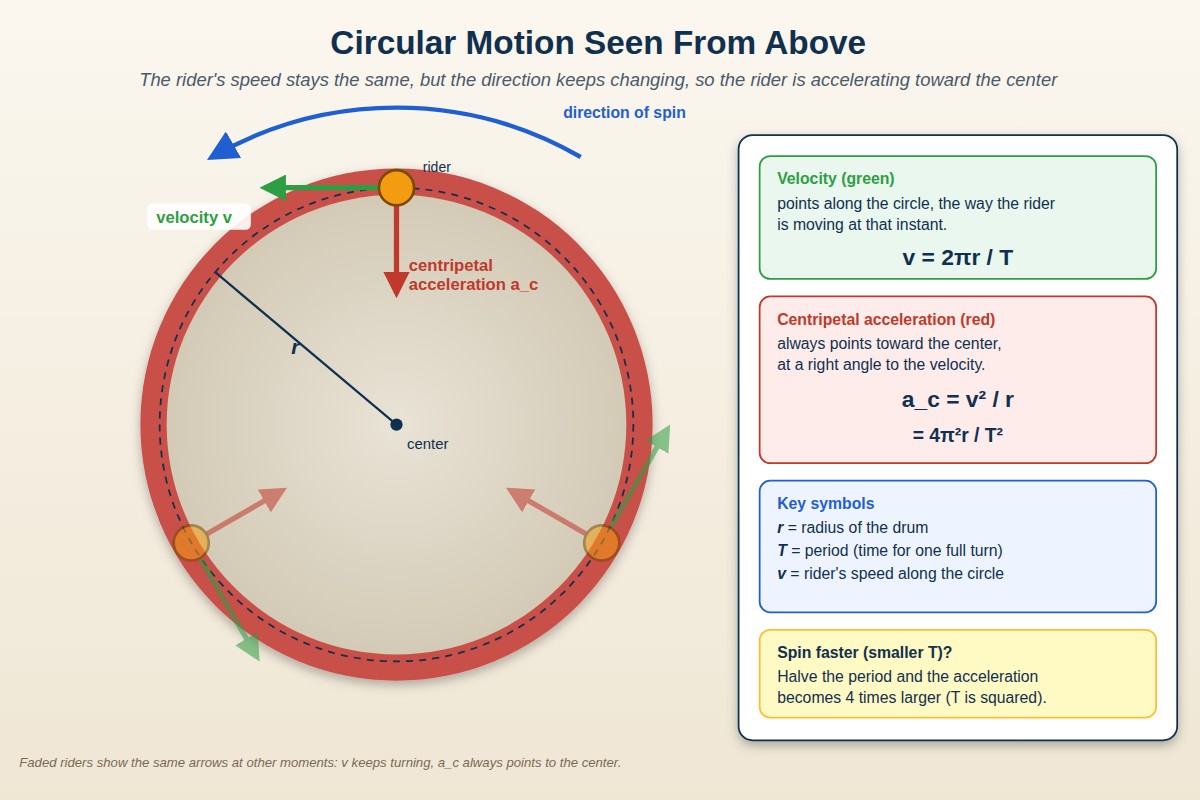
DynamicsThe Centripetal Dynamic of the GravitronWhy does a spinning carnival ride pin riders to the wall while the floor drops away underneath them? An investigation into circular motion, static friction, and the inertia myths riders swear by after they step off.Open Reading Passage
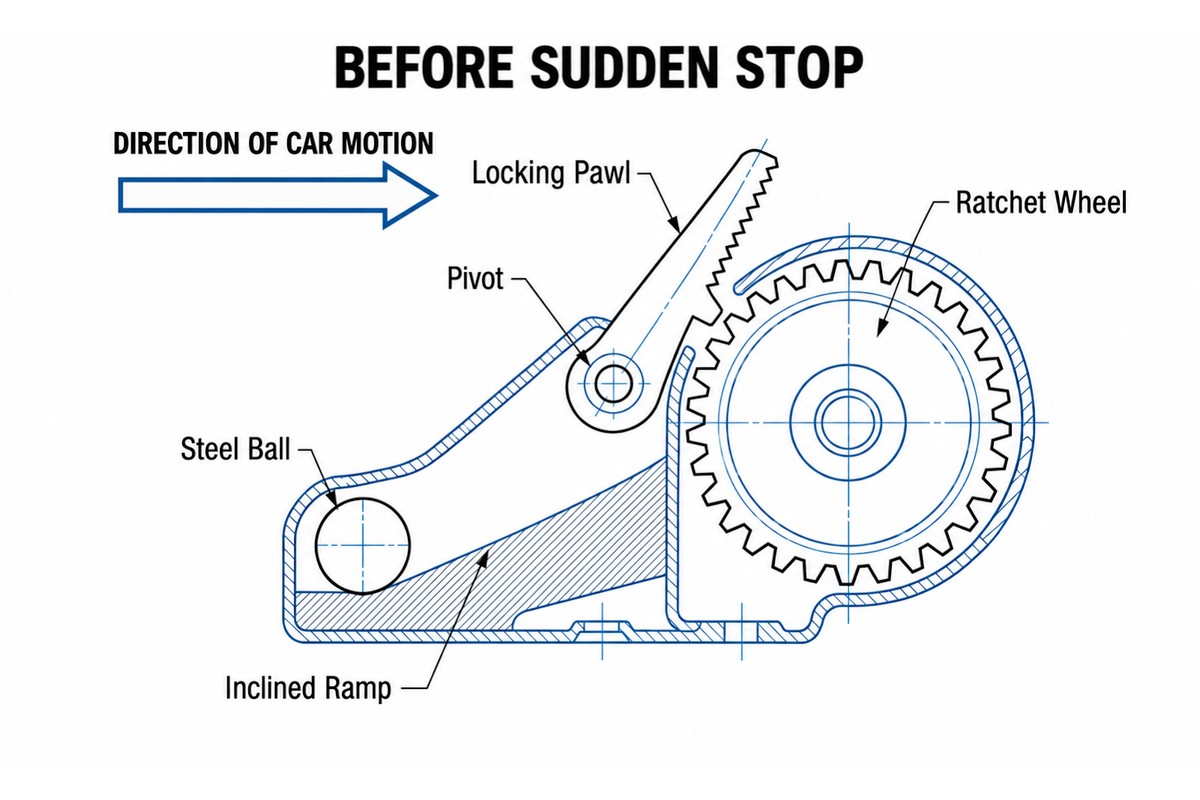
DynamicsThe Physics of SurvivalA humanized design journey through the forces that protect us in a crash — tracing the spring-loaded retractors and locking mechanisms that use inertia itself to keep a passenger's body from becoming the danger.Open Reading Passage
DynamicsThe Physics of the Fist: Force, Impulse, and the Evolution of the Boxing GloveFrom bare Greek knuckles to modern padded gloves — how Newton's Third Law and the impulse-momentum theorem explain a counterintuitive trade-off: padding can protect a fighter's hands while barely helping the brain inside the skull.Open Reading Passage
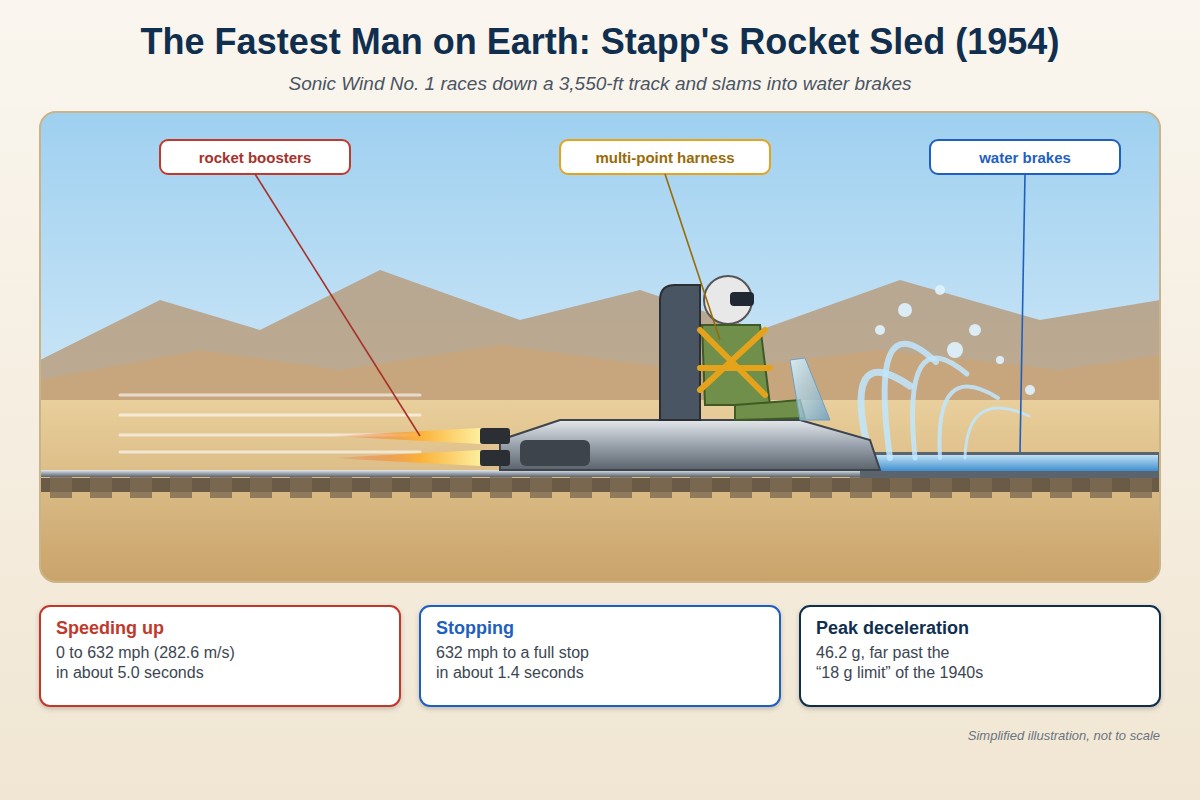
DynamicsThe Fastest Man on Earth: Physics of Crash SurvivalMeet Colonel John Stapp, the Air Force doctor who rode a rocket sled to 632 mph and back to a dead stop — and rewrote what scientists believed the human body could survive.Open Reading Passage
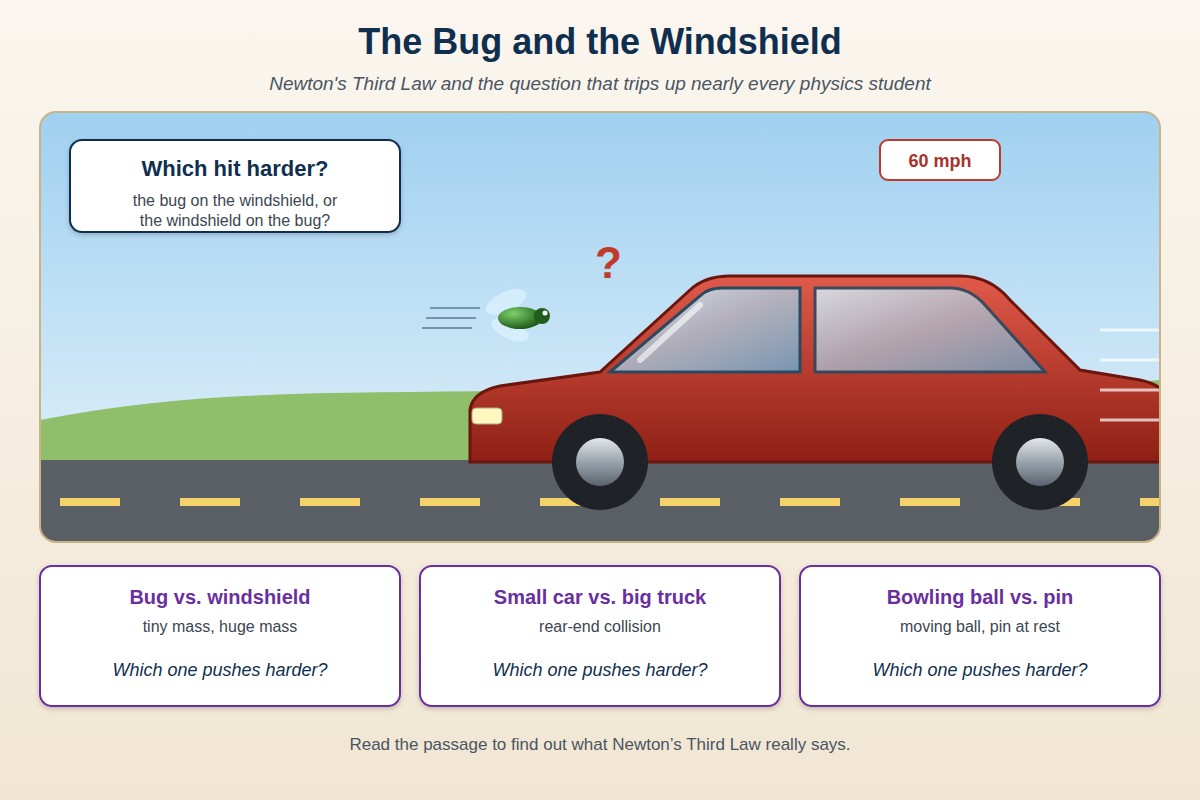
DynamicsThe Bug and the Windshield: What Newton's Third Law Really SaysThe most misunderstood law in physics, minus the misleading poster phrase. Students see why "equal and opposite reaction" backfires as a teaching tool, then rebuild the law the way Newton actually meant it — through a truck-and-car collision, a bowling ball and pin, and Newton's own finger-on-a-stone example — before using mass and inertia to explain why equal forces can still produce wildly unequal effects.Open Reading Passage